News
Finnish Design Mindset at the NYCxDESIGN
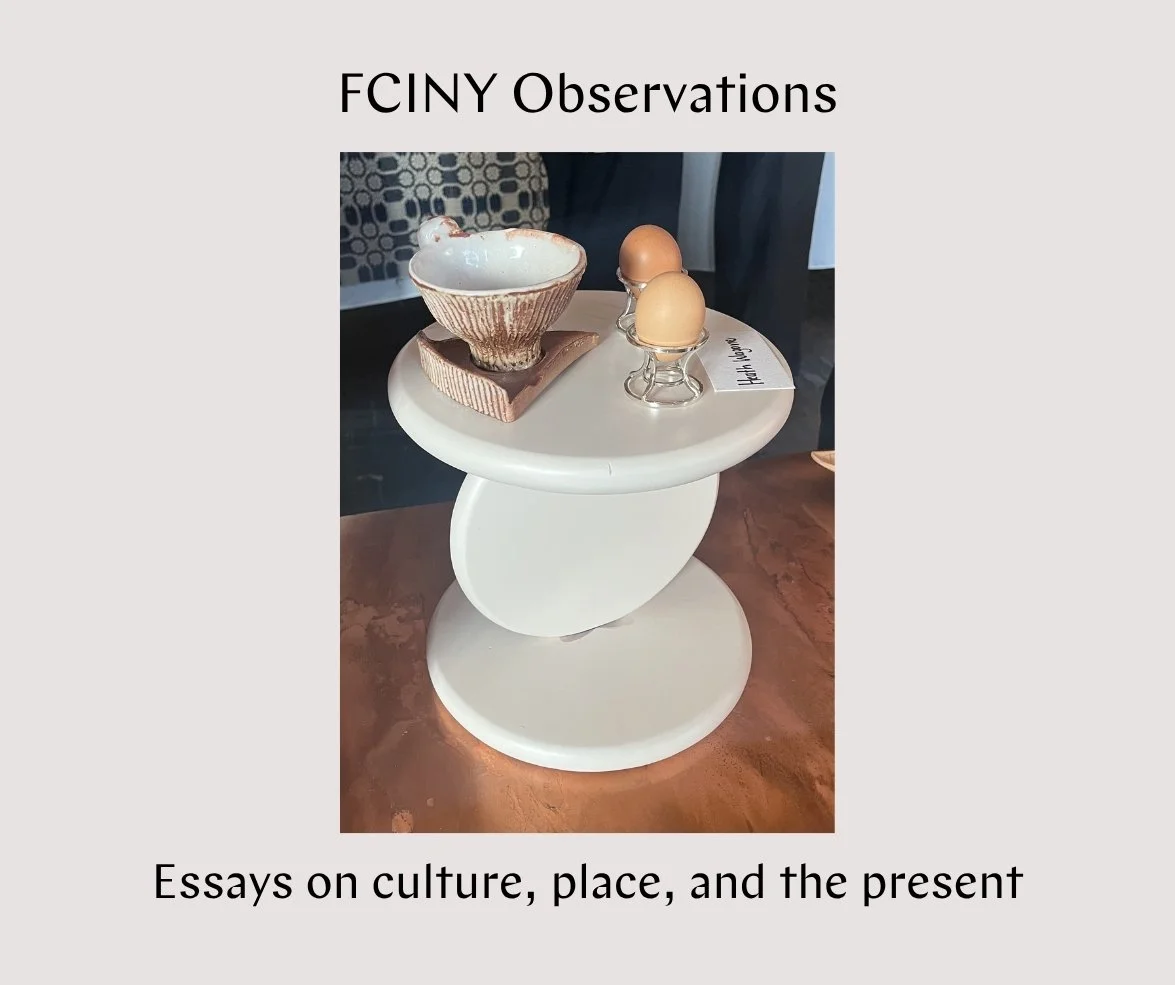
Hanna Anonen’s Pod Low Table at beautifully curated one day exhibition Everything But the Food at Bon Studio, NYC.
The Finnish Cultural Institute in New York's recurrent essay series, FCINY Observations, presents cultural commentary at the intersection of Finnish and New York perspectives.
NYCxDESIGN week came and went, and I was there for the first time. ICFF was my third furniture fair: I have been to the Stockholm Furniture Fair, Habitare in Helsinki, and now here. I went in excited and was on a mission to find Finnish design and see how the American atmosphere and innovations would differ from their Nordic counterparts.
All in all they do not differ as much as I expected. A furniture fair is a furniture fair. New York had perhaps a little less sustainability talk than Stockholm or Helsinki, and a little more wow-design, objects that lead with spectacle. But the underlying questions were familiar. That familiarity made me more convinced that cross-cultural exchange matters.
Finnish design at the festival was not easy to find. A clear exception was Hanna Anonen, who showed her new Baggage collection and participated in six exhibitions during the week. That is a significant presence, and it owes something to the fact that she lives in New York City. Her work did not need to cross the Atlantic just for this. Anonen's design is functional and maximally joyful: bold colors, graphic forms, painted wood. In my view, if color and graphic form are a permanent part of your identity, not a trend of the moment but something that has always been true of you, her objects will not age out of your life. That kind of durability is hard to evaluate from the outside, and impossible to evaluate on behalf of someone else. ICFF did host a panel on the importance of signature spaces, exploring how color, materials and finishes can reflect individual identity, which is adjacent to this conversation. But the framing was luxury, which tends to locate the question in taste rather than in how and why we acquire things at all. The broader conversation about conscious consumption is one I would want to have at a design fair, with other people who have thought seriously about what it means for an object to last.
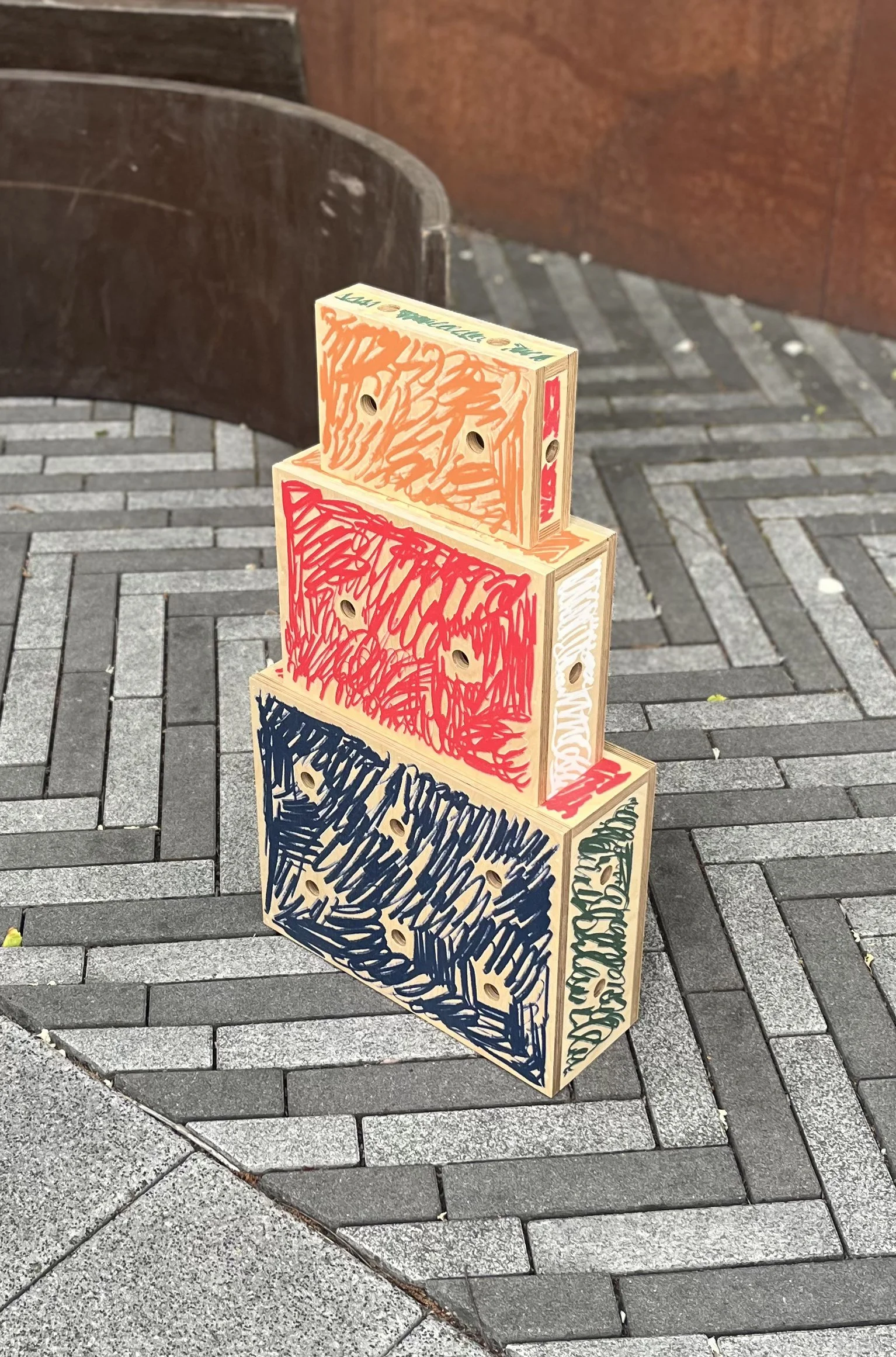
Objects from the Baggage collection by Hanna Anonen.
Beyond Anonen, the Finnish footprint was small and I think I know why. New York is getting further and further away from Finland economically and logistically. Finland is sadly entering a recession, and that together with rising tariffs and shipping costs is changing the calculation. When Finnish companies cut costs, the first to go is the bet that is both distant and uncertain, and for a Finnish studio, the American market has always been exactly that. The internet still carries information across oceans, but algorithms are not curators. They surface what is already known, without a set of values and a long term mission.
Apartamento published a book on Miguel Milá, the Spanish designer, in 2022. During NYCxDesign week this year, I went to an event at Santa & Cole celebrating the book's touring exhibition. Milá died in 2024, at the age of 93. Milá belongs to a generation that believed the starting point for design was always a problem that needed solving, not a company's need to make profit, but a real problem. That idea produced some of the most enduring objects of the twentieth century. I keep wondering whether the conditions for that kind of work still exist, or whether commercial pressure has simply multiplied the number of people making furniture to the point where genuine innovation is harder to see and harder to reach the people who need it.
Walking through the ICFF fair, I kept sorting what I saw into three rough categories. There is new aesthetic design: work that is primarily about identity and visual pleasure, the best of which earns its place through genuine personal durability. There is the new solutions design: work that aims to solve a problem, for example by introducing a material or a method or a logic that did not exist before. And then there is what I think of as design for money's sake only: old ideas in new clothes, work that exists because someone needed a profit from a product, not because anyone needed this product. Like a white fluffy sofa whose covers could not be removed. A chair that could not be disassembled for fixing and recycling purposes. I saw an enormous metal tent frame, striking to look at, impractical to move, since it is two meters off the ground. When I asked about the design decision to have the sleeping space so high above the ground level, the answer was that its form was already recognizable. That was the point, apparently.
The category I wish to see most, and more of, is the middle one. Design as a vehicle that deciphers complex information into solutions. It can address problems across many fields, not only in the aesthetic world. To take shared steps forward, the power of design to identify problems, solve them and push through barriers must be unlimited.
And for that to happen, there has to be exchange. Designers, companies and ideas have to meet. That exchange slows down when the shipping invoice is the reason a show does not travel. It can feel harmless at the moment but over time, it starts to drag our mutual progress. The same solutions could be developing independently on different sides of the world, unaware of each other. Parallel development is not inherently a problem. But design is not a race to a finish line. It is a discipline that gets sharper through encounter, through the friction of different traditions meeting and having to negotiate. When that friction disappears, the solutions that emerge are probably fine. They are just not as good as they could have been. The problems design is trying to solve are not Finnish or American. They are shared. And the best chance of solving them is to keep the conversation going.
Soon I am returning to Finland to continue creating Sälä, a magazine for Finnish design. New York and Sälä Magazine were never unconnected in my thinking, but something has sharpened here. Thank you NYCxDESIGN! Having seen what the exchange looks like in practice, and where it breaks down, I understand more precisely what a magazine about Finnish design can do: not only document what exists, but keep Finnish design mindset in conversation with the world outside its own borders. That feels like enough of a reason to go back home.
Mimosa Tast
10.6.2026