2026 Residency
Jade Kallio on Undergarments and the Machinery of Desire
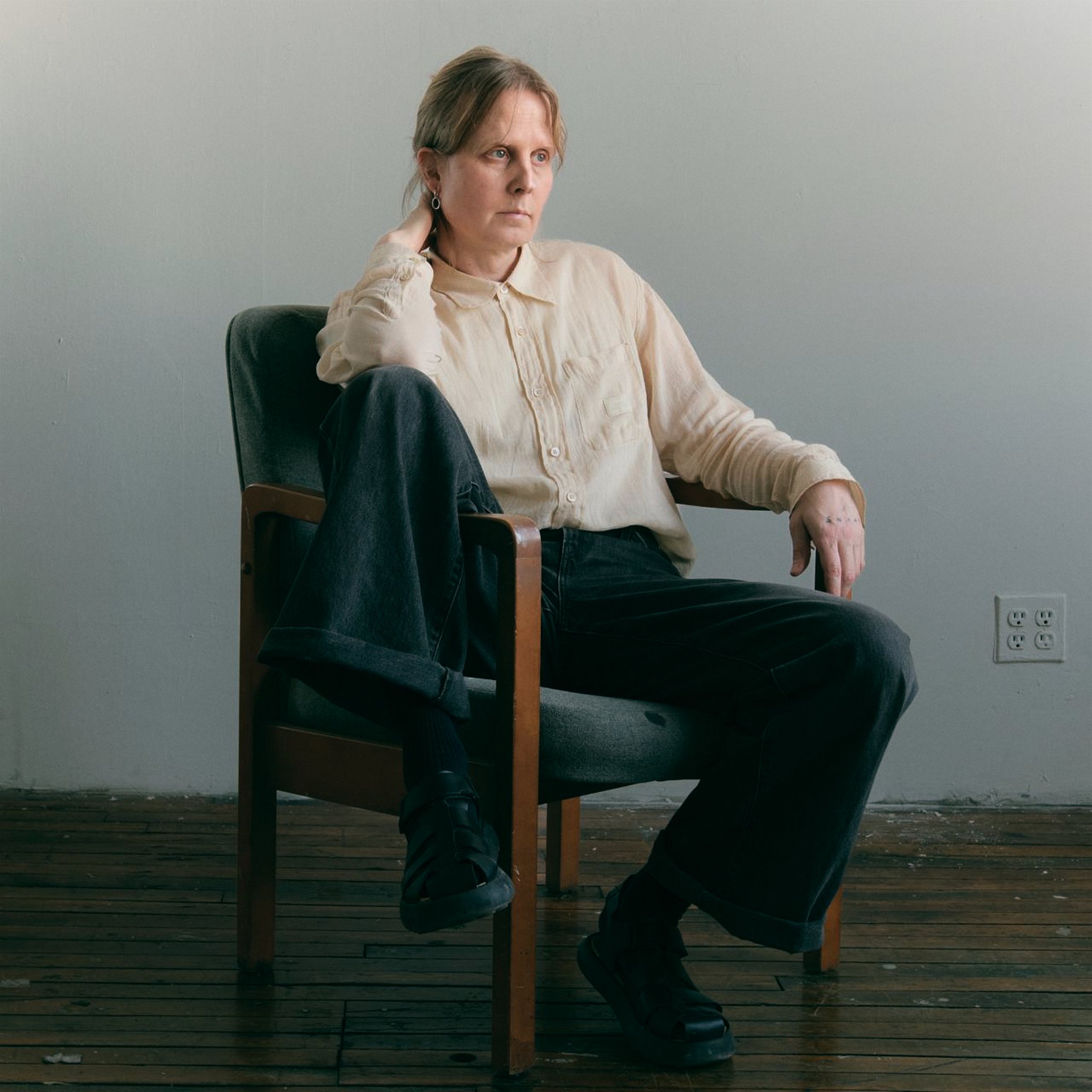
Jade Kallio
Kallio is a Helsinki-based filmmaker and artist whose practice reflects on gender, corporeality, and the spaces and social structures in which meanings are produced, with a focus on trans identities and marginalized experiences. Kallio explores how social norms shape possibilities for existence and visibility.
Current projects blend documentary, speculative fiction, and magical realism while considering production structures, working conditions, and questions of narrative authority.
Kallio came to New York for their residency at ISCP in the beginning of this year, and has now spent half a year in the city. We wanted to catch up with Kallio and see what they have been up to and what impressions half a year in this city has left, before they return back to Finland.
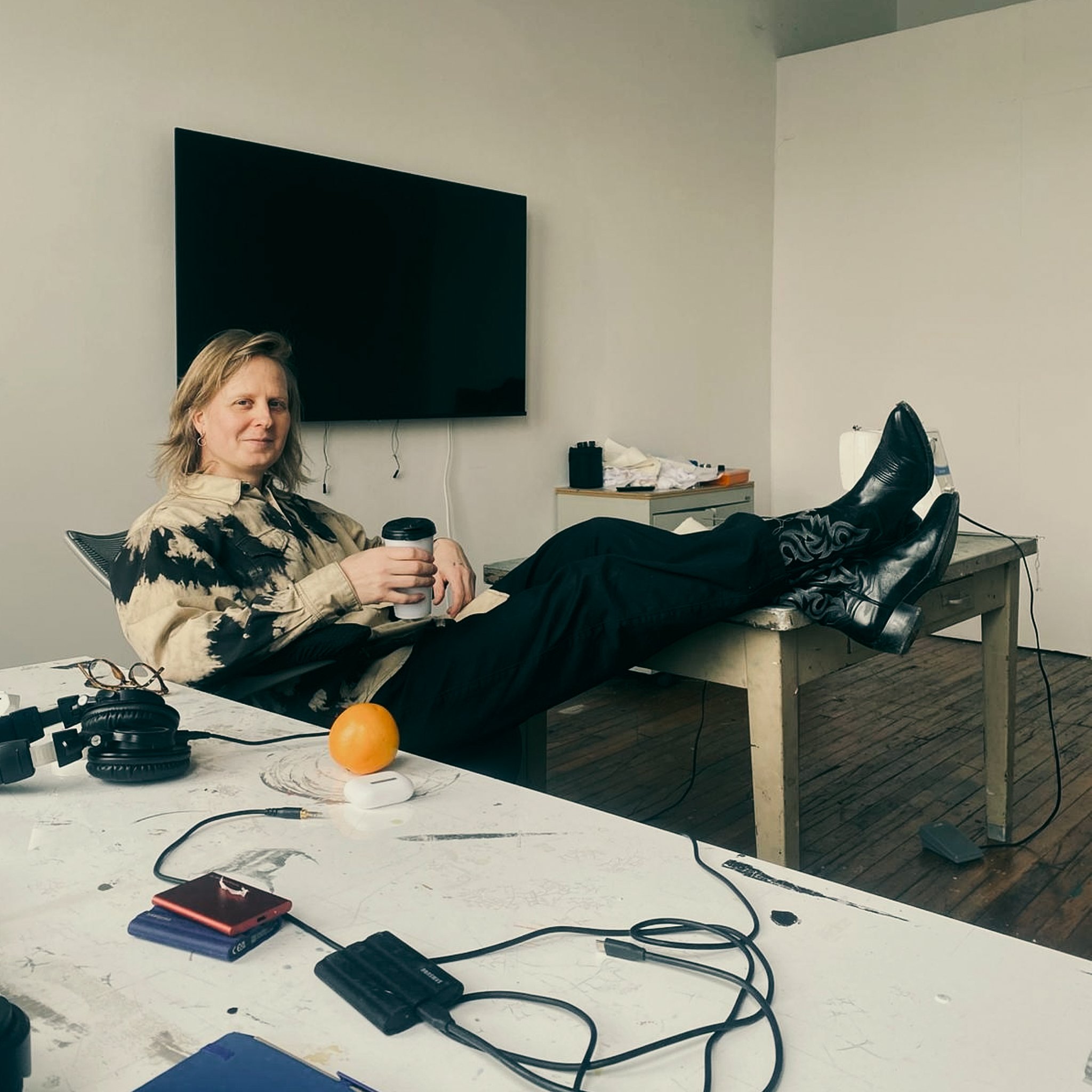
Jade Kallio in their studio at ISCP, photo by Heikki Heinonen
Can you tell us a little bit about your background and your artistic exploration?
A bit more than 20 years ago, I intended to apply to university to study religious studies. It was a sort of unexpected turn that I ended up studying art instead.
I have quite a diverse background when it comes to art making. My artistic practice hasn’t been particularly clear or consistently career-oriented. I studied painting at first. That’s really where my artistic practice started. After graduating, I became more interested in performance, organizing events and happenings. For the first ten years of my artistic practice, I mainly collaborated with other artists and was part of artist collectives such as MSL, BETA, and Anna Breu. I was also active at Titanik Gallery, an artist-run space in Turku, for ten years. This collaborative way of working still remains valuable to me, even when it comes to my own projects.
A bit later on, I got into video and filmmaking, which is now in the core of my practice. Perhaps one reason why I became interested in filmmaking was that it allowed me to combine many different ways of making art, and I could work with other artists. Also, with films and scripts, I could have fun, laugh, and be critical, compared to the process of painting, when you are alone in your studio. I mean, why not! Maybe I was a bit restless when I was younger. I also got fed up with storing my old, huge oil paintings.
What has stayed with me, though, is the feeling of wanting to return to painting. I’ve been saying this for more than 10 years now. It might happen someday.
What made you want to come to New York for this residency?
To be honest, lately I couldn’t have imagined myself coming to New York. That was mostly because the political landscape in the US has been quite spicy. Even though polarization and the rise of far-right politics have been the way things have been going in the US, that’s not the same thing as the culture and the people who live there.
A friend of mine encouraged me to apply for the ISCP residency. And now, after the residency, I’m so happy that I applied and that I was lucky enough to be selected, because I gained so much from my time in New York. It was actually quite touching to experience how openly supportive New York is of queer people and how positive and uplifting the atmosphere was.
Of course, like probably many others, I’ve grown up surrounded by countless pieces of popular culture, music, and films connected to New York throughout my life. I’ve also been really interested in queer subcultures and histories, such as ballroom culture, the Stonewall era, and the queer history of the Meatpacking District. So it was exciting to just wander around the same places and spaces where so much of this has happened. There’s something really special about this city.
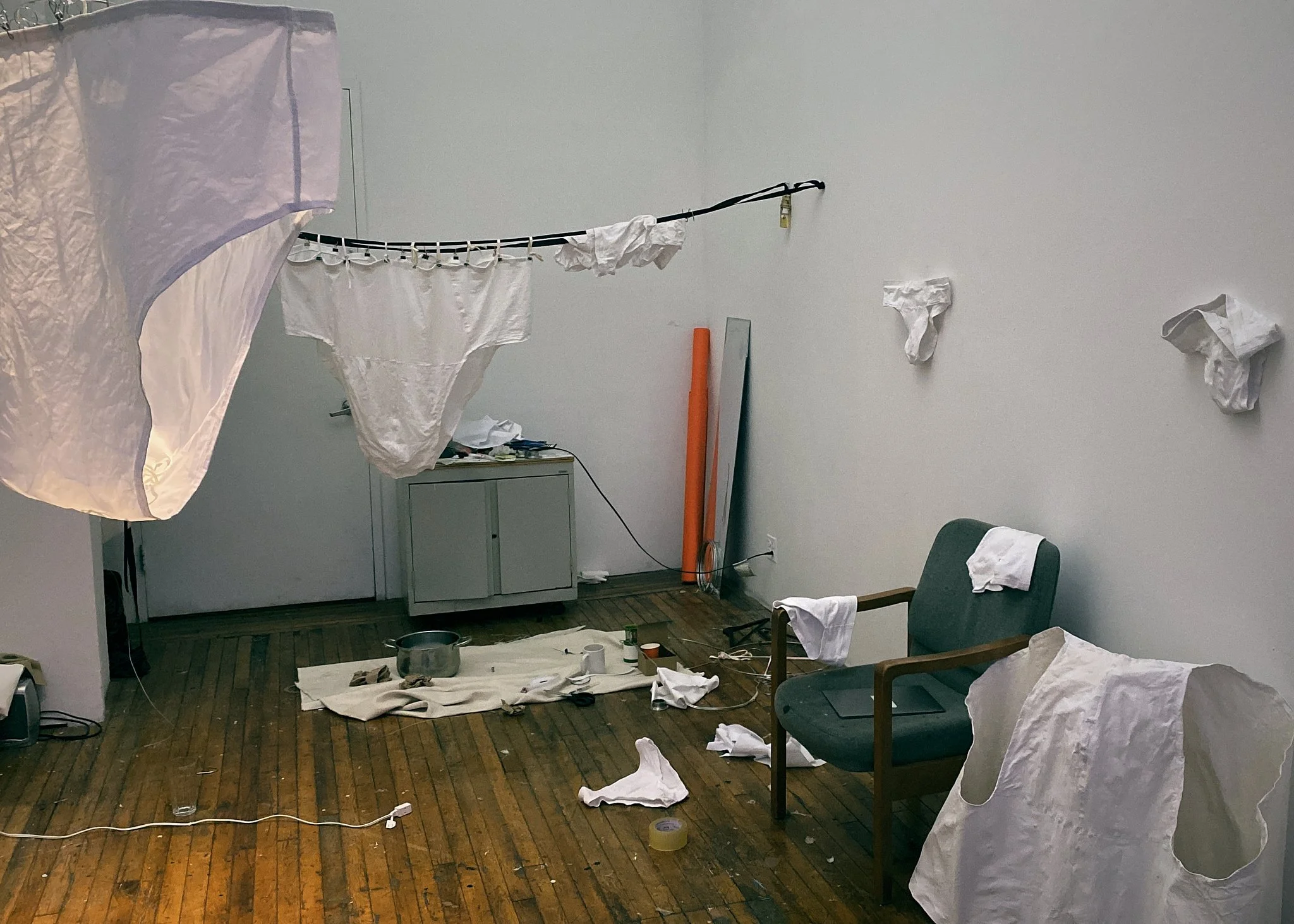
Kallios studio at ISCP
Can you tell us about the project you’ve been working on during the residency?
Before the residency, I decided not to prepare a new project that I could continue working on in New York. I didn’t really know what to expect from the residency and the city – and I also thought it would be more interesting to challenge myself. For me, the point of residencies is to explore the unknown and meet new people.
Rather than focusing on professional networking, meeting curators and gallerists, or seeking opportunities, which is something NYC is famous for, I was more interested in slowly finding my way there: seeing how the environment affects my body, and how my mind unconsciously finds new connections and interests.
At the beginning of the residency, I often went to the studio at ISCP and met a lot of lovely artists who were part of the residency. But I was also just wandering around the city and reading a lot of different texts, articles, and books, like Walking Through Clear Water in a Pool Painted Black, a posthumous anthology of writings by Cookie Mueller, and Weight of the Earth: The Tape Journals of David Wojnarowicz, to mention a few. And I was writing, trying to organize this constant stream of information.
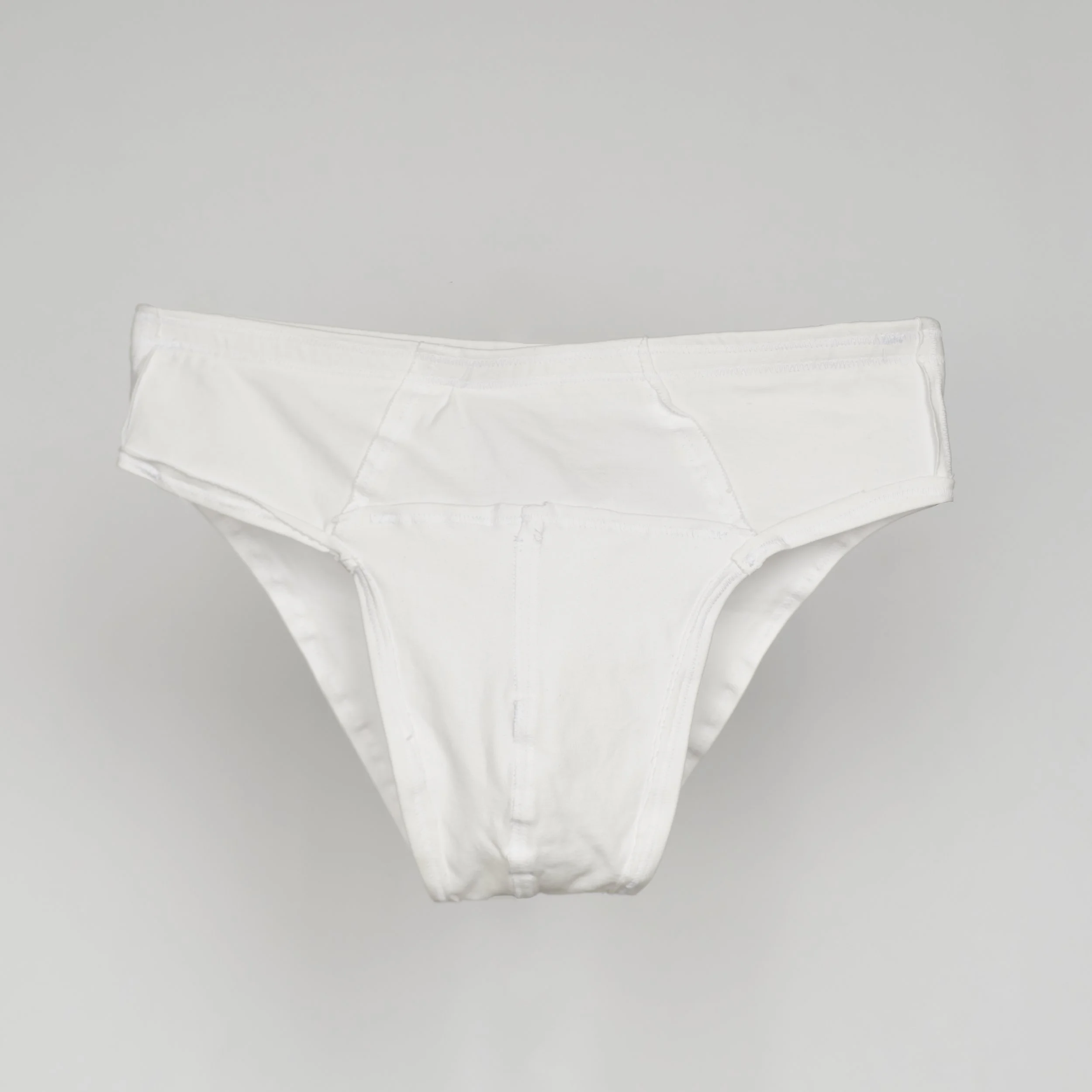
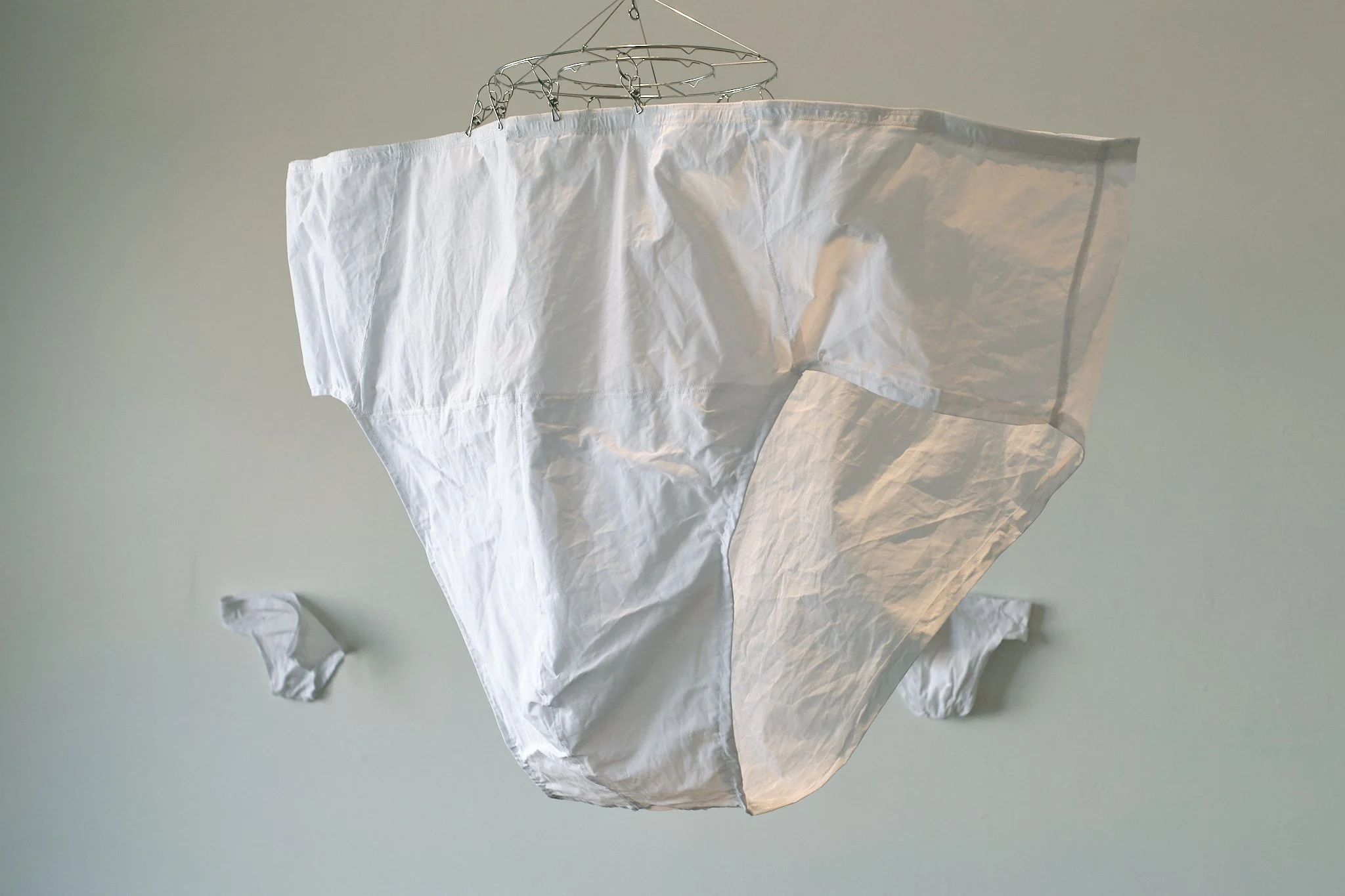
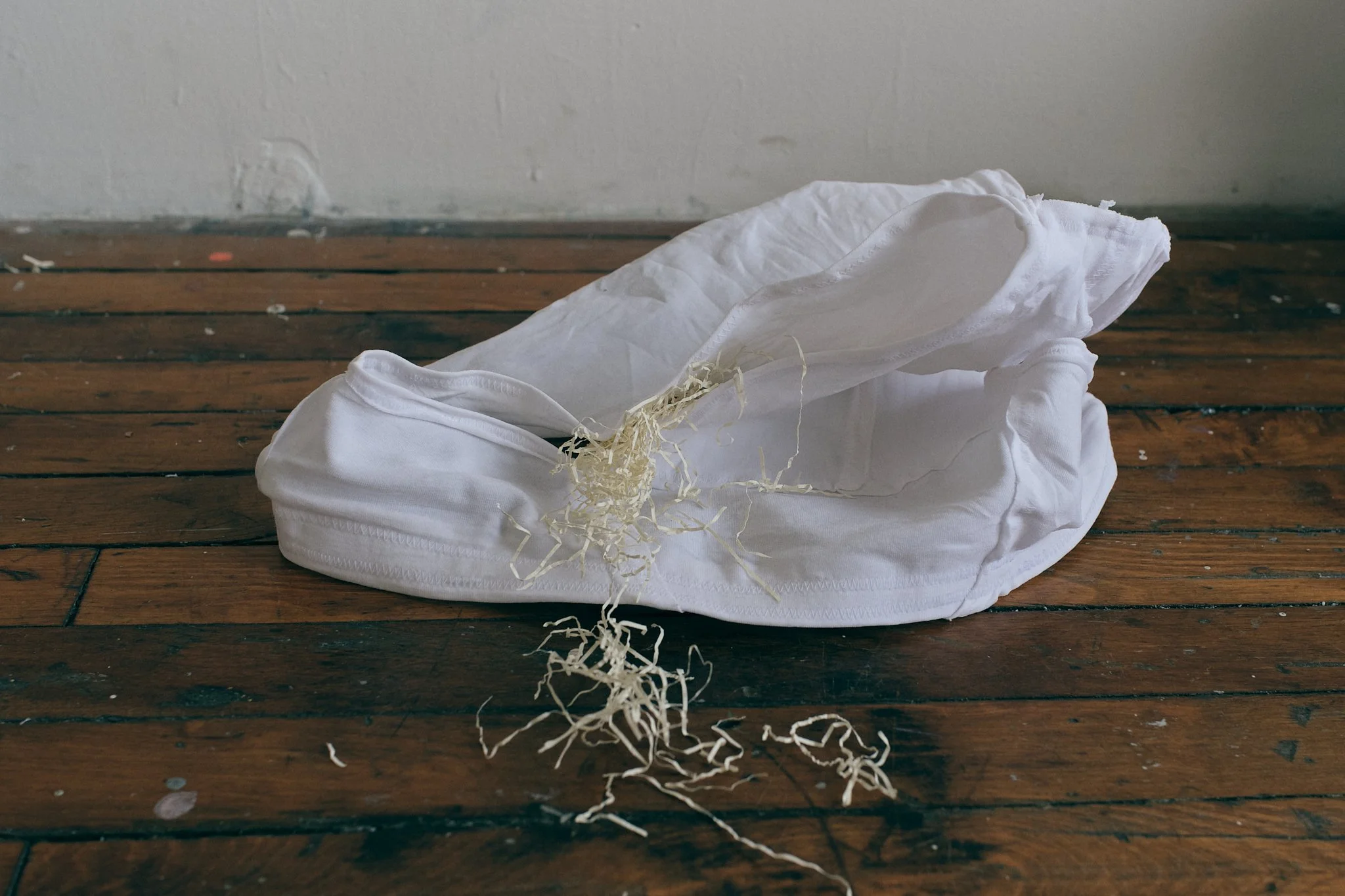
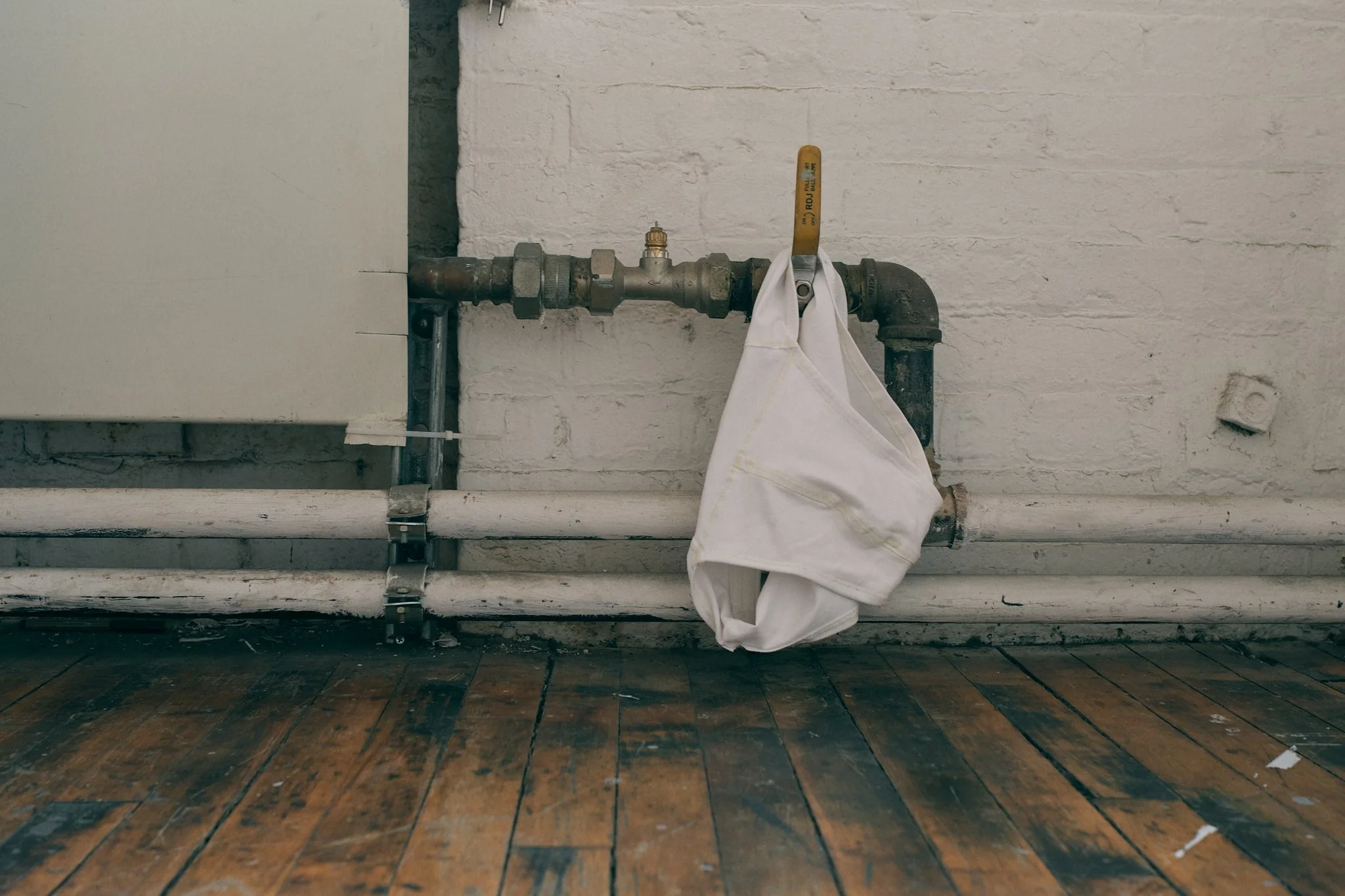
Maybe partly as a response to how more and more things started to feel like a spectacle, where everything is turned into something to be looked at, consumed, or experienced, I found myself thinking about underwear at some point, for example from the perspectives of consumer capitalism, gender, and labour. I started thinking about how this layer of clothing, hidden between the skin and the outer layers of clothes, is so loaded with meanings.
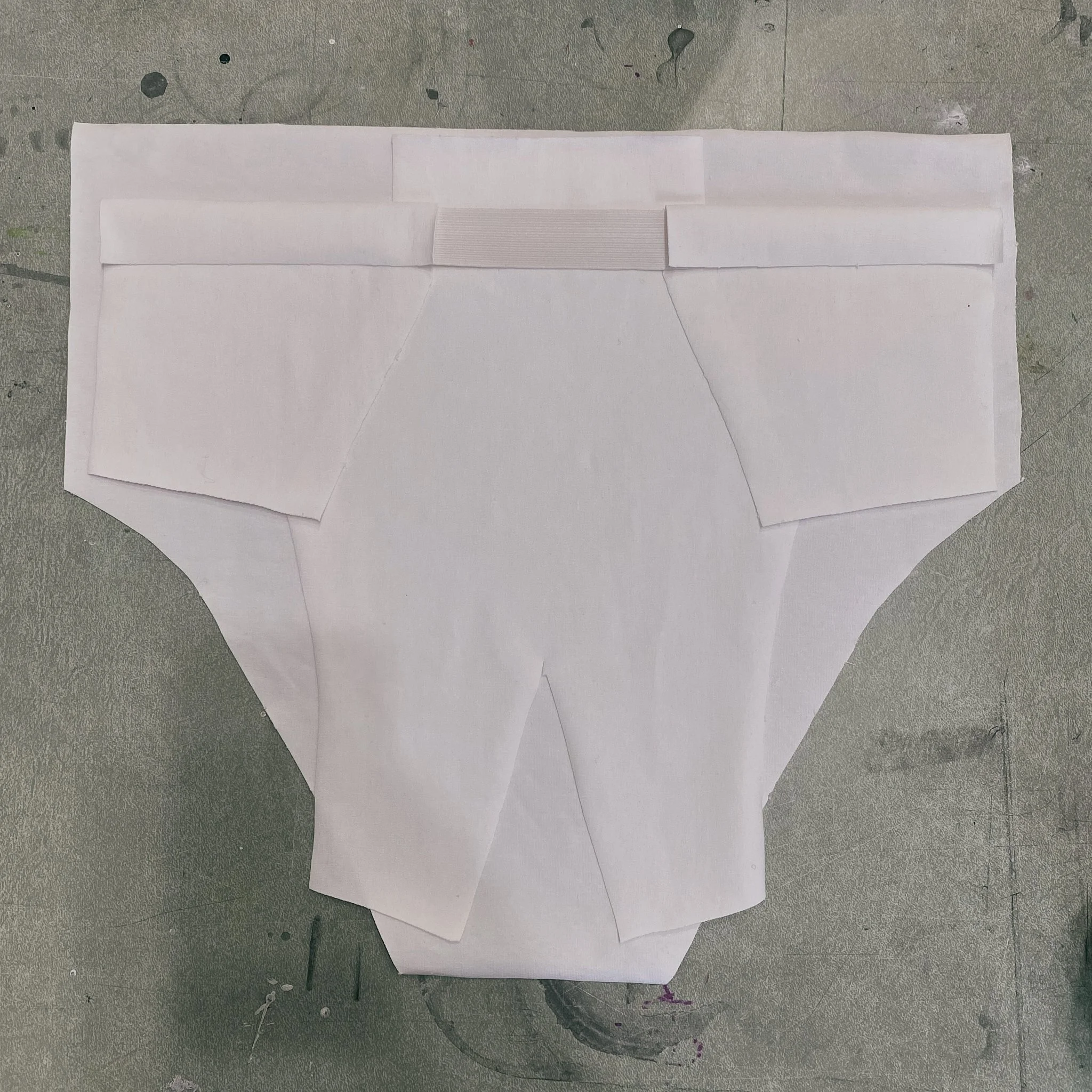
Then I basically decided to learn how to make underwear. At first, just for myself, and eventually I began making my own patterns. The idea was that by working with my hands and repeating the process of making these undergarments, my mind would go deeper into the design, the materials, fabrics, and sewing, and eventually I would begin to understand on a deeper level what I was actually doing.
I then started writing a script for my next film. It’s roughly about longing, desire as a haunting feeling, and how desire is in constant movement from one person to another. Undergarments are some sort of devices within this machinery of desire.
Now, back in Finland, I’m still deeply fascinated by this project, which has opened up in quite different and unexpected directions. It has also made me realize how important it is to follow your gut feeling, even when it might sometimes seem completely irrelevant or ridiculous.
How do you experience the difference of being an artist in Helsinki, compared to New York?
Working is different in Finland. I often feel that my work needs a calm and simple environment. It’s easier to get lost in your own thoughts and really focus on your work when there isn’t much happening around you. In that sense, Finland is a really good place to work. But there’s another side of me, this hunger for movement, changing scenes and chaos. I need both of these things, not just for my work but for life in general.
After the intensity of New York, I’m actually really happy to be back in Finland. I was worried that going from all that hustle back into stillness would feel shocking, but it’s been the opposite.
In New York, I liked the feeling of being part of something so fascinating, even though I was often just sitting alone and watching people in parks and on the streets, rushing off somewhere, or trying to cool down on the subway before whatever came next. Everything feels so electric in New York. I loved that feeling, but I can’t be so electrified all the time, and it made me appreciate working in Finland even more.
In Helsinki, distances, like to my studio or the city center, are short. The forest is only a 15-minute walk away. There aren’t that many people on the streets. The city is relatively quiet. There are empty parks everywhere, and so many places where you can go swimming. Food is affordable and vegetables feel fresh.
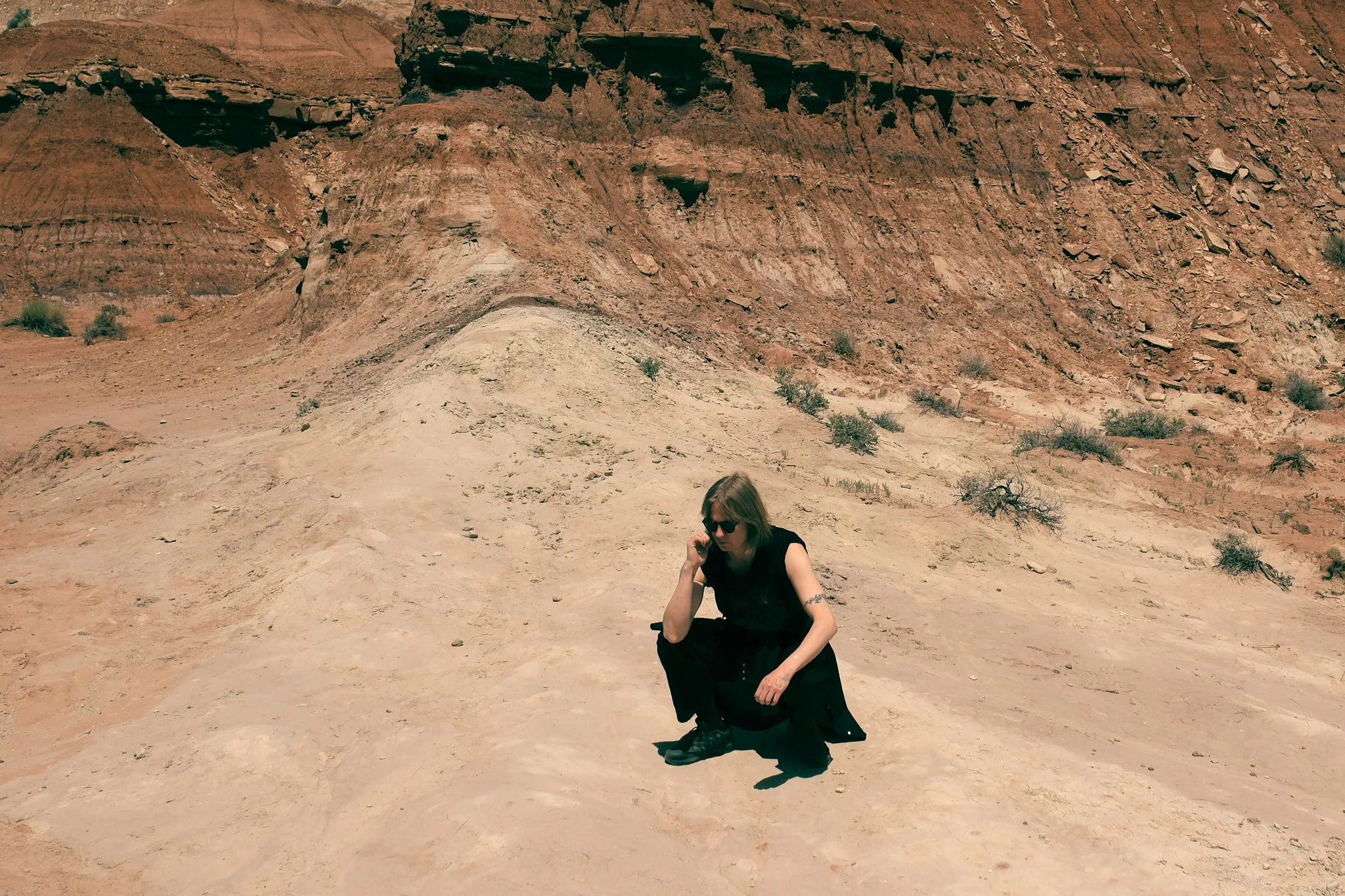
Jade Kallio, photo by Remi Vesala
What are some of the highlights or most memorable moments of your residency and your time in New York?
I’d say the whole six months in New York were unforgettable, including the times when I was so exhausted by the city that I literally couldn’t leave my apartment. I can really see how exhausted I was myself in the podcast episode I made with the amazing artist and dear friend of mine, Mette Sterre. The podcast was produced by the Finnish New York Cultural Institute and is linked at the end of this article.
I went to Brooklyn Pride. While watching the parade, I realized how meaningful Pride is in New York, and how its history gives it a different meaning, not just as a celebration, but also as a protest and a civil rights movement.
One of the highlights was seeing and feeling the huge positive impact New York’s newly elected mayor, Zohran Mamdani, had on New Yorkers. It was amazing to see how much hope and optimism his election seemed to create, and also to see how Mamdani has acted since taking office.
I’ve never really followed any sports, and in New York it was impossible to avoid the NBA Finals, when the New York Knicks won the championship. I watched all the final games out on the street in Williamsburg. Seeing people from all sorts of cultural and religious backgrounds, regardless of gender, all sharing the same space, screaming, crying and hugging each other when the Knicks won was incredibly moving. There was something really beautiful about it.
And of course, one of the absolute highlights was all the wonderful people I met during the residency. The openness and kindness of the other artists, and of people in general, and the way everyone seemed to encourage and support each other. It was really beautiful in many ways. And sometimes it was also a bit too much to handle emotionally!
You have now lived in New York for half a year. Do you feel like you have changed or developed as a person or artist?
Absolutely, both as a person and as an artist, although I don’t always know how to separate those two roles.
I don’t really know yet exactly how I’ve changed or what has changed in me. I’m sure it will take some time to process the whole experience. I’m especially looking forward to getting back into my studio and working, and through that, processing some of the feelings and experiences that are still kind of sitting in my body. I still feel a tremendous sense of excitement inside me.
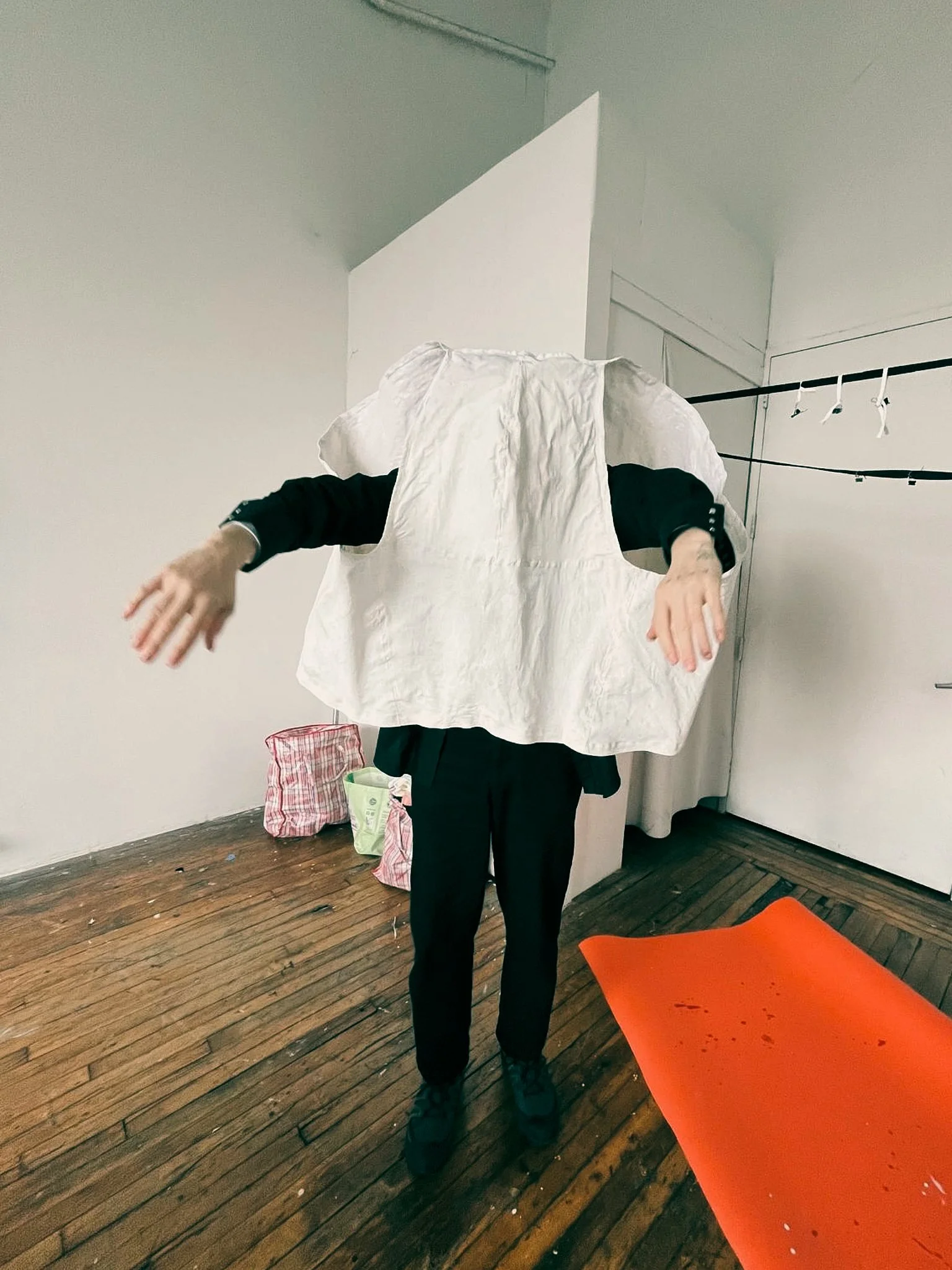
Photo by Elmo Nissinen
What are your best tips on places or food to try when coming to New York?
When I first went to New York, I started going to a lot of exhibition openings. They’re a good way to get a sense of an unfamiliar city’s art scene and to discover different exhibition spaces, but also to get to know the city itself. But I pretty quickly realized how commercial the New York art scene is, and that’s not something that particularly interests or excites me. Then instead of going to openings, I ended up going to concerts, stand-up comedy nights and drag shows. I would definitely recommend all these! There’s so much to choose from, and the quality is really high.
When it comes to food, New York is a really amazing city. There is such an incredible variety, with one high-quality restaurant after another. The only downside is how ridiculously expensive the city is. Personally, I enjoyed the more budget-friendly street food, which was also great! It’s difficult to name just a few places, whether we’re talking about the countless burger joints and pizza slice places, or the really affordable little restaurants in Chinatown.
What are your plans when this residency program ends?
It feels like six months in New York fills your body with so many experiences and emotions that it can easily take another six months to process them. Alongside all of that, I’ll also be focusing on working towards an upcoming exhibition. I have a collaborative exhibition with artist Antti Jussila coming up at Helsinki Art Museum in early 2027. Antti and I have been working together for around 20 years as part of the MSL collective we founded. Since 2007, we’ve made performances and films together and organized exhibitions. I’m really excited about this project, and it’s also really nice to be making the next exhibition together with Antti.
Besides that, I’m now focusing on writing the script for my next film, which I started working on during my residency at ISCP, and exploring the different dimensions of these garments, both as wearable clothing and as devices within the machinery of desire. Now that I’m back from NYC, the idea of getting lost in some subtle routine of going to the studio and focusing on quiet writing feels really exciting too.
If you want to hear more about Kallios work in New York, watch and listen to their podcast episode, joined by artist Mette Sterre: Withstanding Season 5 Episode 4: On Creating Outside the boxes of categorization and social norms. You can access the podcast on Spotify, YouTube, Apple Podcasts and SoundCloud.