2025 Residency
Harriina Räinä on Oysters, Shells, and the Ecology of Restoration
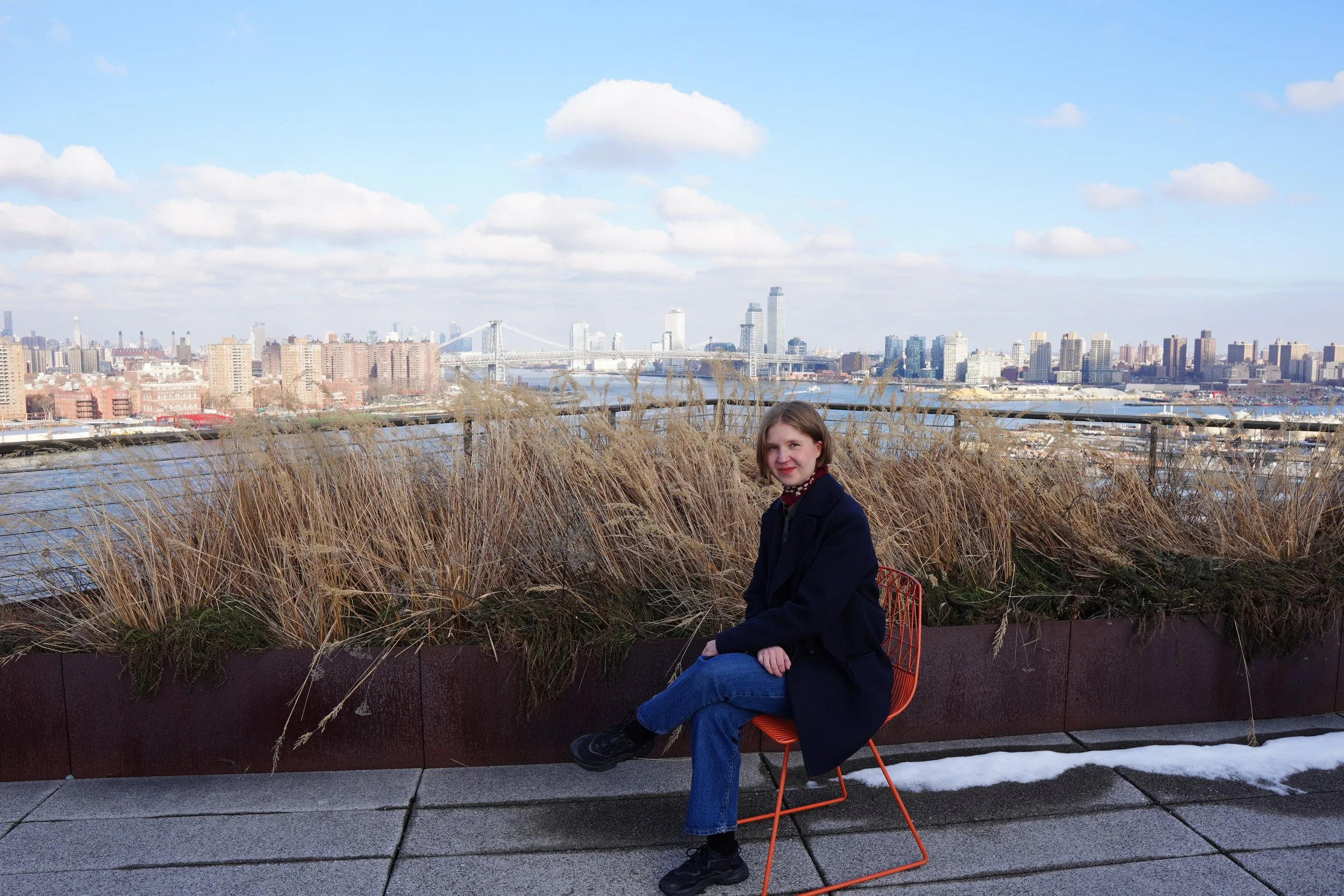
Photo by Emma Termonen
Harriina Räinä is a research-oriented visual artist based in Helsinki, originally from northern Finland. Harriinas practice is shaped by ecological thinking and a strong, reciprocal relationship with land and multispecies life, exploring themes such as material agency, corporeality, and human–animal relations. Working across sculpture, photography, and experimental printmaking, she often traces the tensions between the natural and the artificial through material-driven inquiry. In fall 2025, Harriina was an artist-in-residence at Triangle Arts Association in New York, where she continued her long-term project on oysters and their shells—deepening her investigation into oyster–human relationships in a city where oysters have played a pivotal role in its past, present, and future.
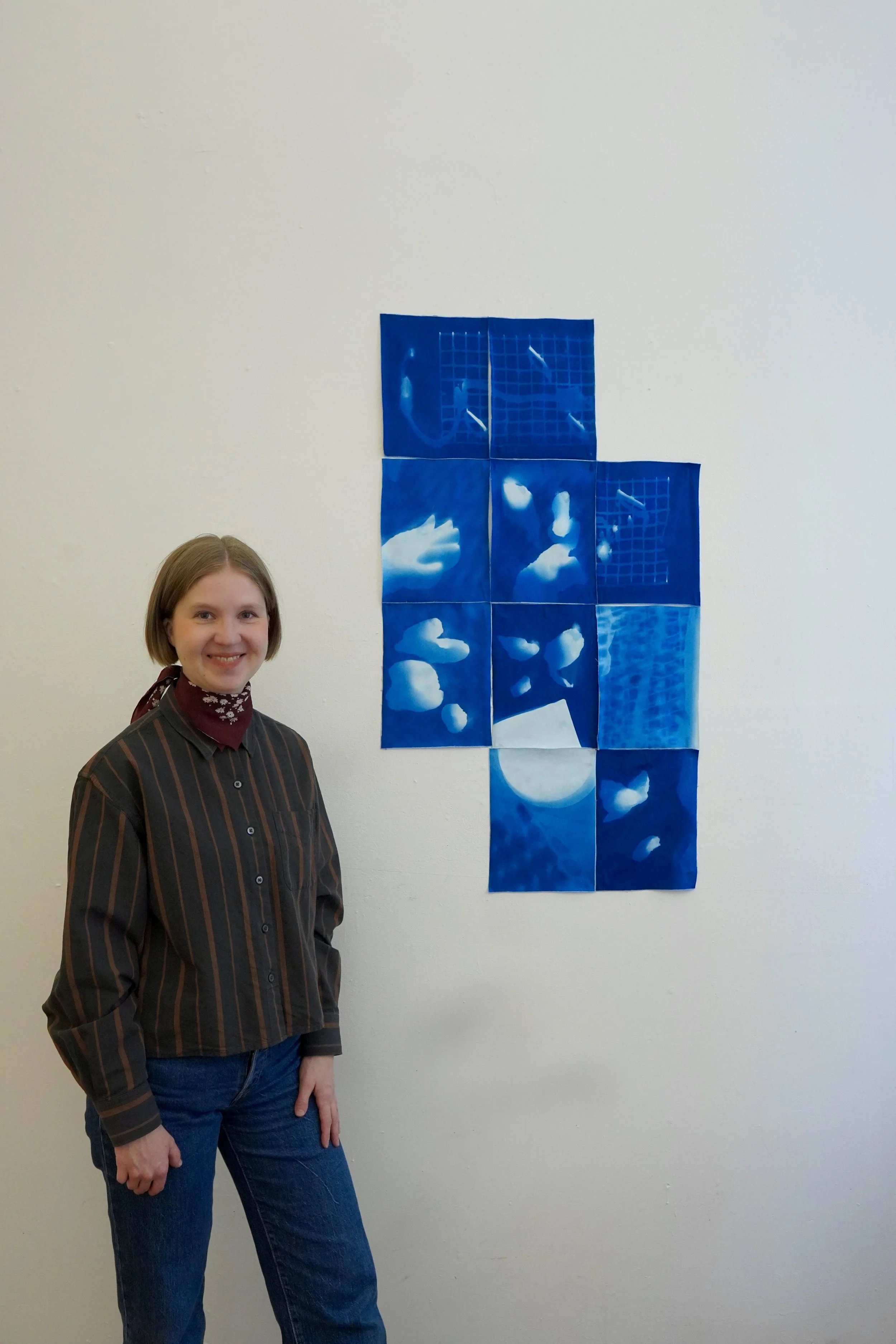
Photo by Emma Termonen
𝗪𝗵𝗮𝘁 𝗺𝗮𝗱𝗲 𝘆𝗼𝘂 𝘄𝗮𝗻𝘁 𝘁𝗼 𝗰𝗼𝗺𝗲 𝘁𝗼 𝗡𝗲𝘄 𝗬𝗼𝗿𝗸 𝗳𝗼𝗿 𝘁𝗵𝗶𝘀 𝗿𝗲𝘀𝗶𝗱𝗲𝗻𝗰𝘆?
I had dreamed of coming to New York for several years. The wish began when I accidentally met an American researcher and writer in Paris in 2022, who told me how New York used to be an oyster city, with waterways full of natural oyster reefs that filtered and purified the water. I had just started working with the oyster theme at that time, and the image of a city surrounded by oysters stayed with me.
𝗪𝗵𝗮𝘁 𝗵𝗮𝘃𝗲 𝘆𝗼𝘂 𝗯𝗲𝗲𝗻 𝘄𝗼𝗿𝗸𝗶𝗻𝗴 𝗼𝗻 𝗺𝗼𝘀𝘁 𝗱𝗮𝘆𝘀 𝗱𝘂𝗿𝗶𝗻𝗴 𝘁𝗵𝗲 𝗿𝗲𝘀𝗶𝗱𝗲𝗻𝗰𝘆?
On most days, I have been working on my project, either in my studio in Brooklyn or doing fieldwork at various sites. I also visited a large number of exhibitions and took part in many events related to art and environmental issues. In addition, I participated in a reading group that focused on the relationship between animals and capitalism, from the perspective of metabolic labor. This reading group offered important theoretical tools for my work.
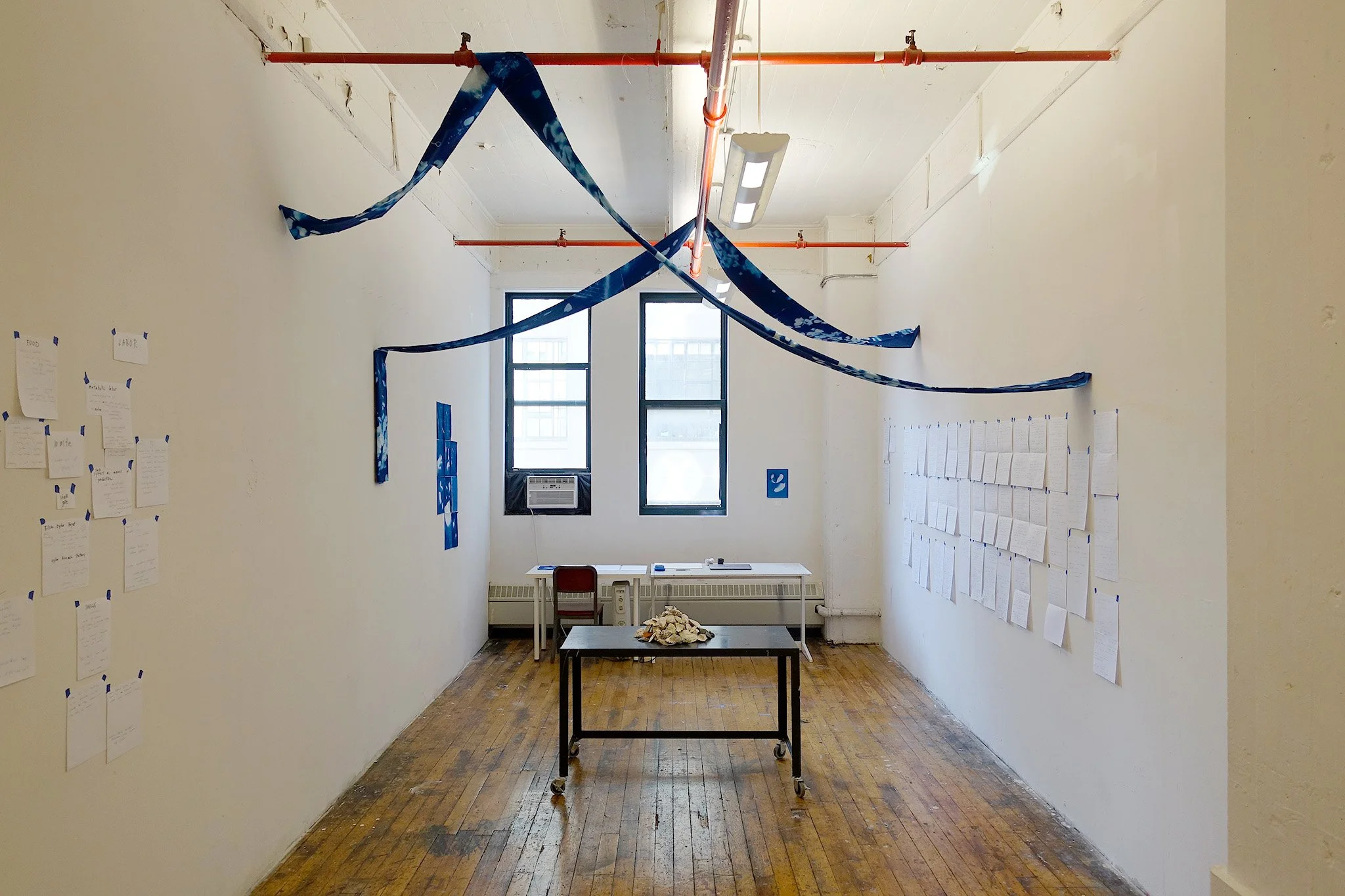
Studio space at the Triangle residency. Photo by Harriina Räinä
𝗗𝗶𝗱 𝘆𝗼𝘂 𝘀𝘁𝗮𝗿𝘁 𝘀𝗼𝗺𝗲𝘁𝗵𝗶𝗻𝗴 𝗻𝗲𝘄 𝗵𝗲𝗿𝗲, 𝗼𝗿 𝗰𝗼𝗻𝘁𝗶𝗻𝘂𝗲 𝗮𝗻 𝗲𝗮𝗿𝗹𝗶𝗲𝗿 𝗽𝗿𝗼𝗷𝗲𝗰𝘁? 𝗪𝗵𝗮𝘁 𝗮𝗿𝗲 𝘆𝗼𝘂𝗿 𝗰𝘂𝗿𝗿𝗲𝗻𝘁 𝗽𝗿𝗼𝗷𝗲𝗰𝘁𝘀 𝗮𝗯𝗼𝘂𝘁?
I started a new chapter in my long-term project, which looks into oyster–human relationships and oyster shells. I have worked with this theme earlier in Europe and Japan, and it has been very exciting to continue the work in New York.
Here in New York, I focused on looking at oysters as active agents in their environment – especially from the perspective of metabolic labor. Overharvesting, pollution, and the industrialization of the city destroyed the reefs, which had been an important food source for Indigenous peoples and later for New Yorkers. There are now projects that aim to restore the reefs for ecological reasons, and during the residency I followed this work closely and also took part in it.
During the residency my key interests have been how local oysters first labor to become food for humans, then how their shells are recycled and used in reef structures and as a planting surface for new oysters, and finally how new oysters labor to purify the harbor water by filtering it. Of course, one can argue whether oysters, or animals other than humans, can labor – but that depends on the definition.
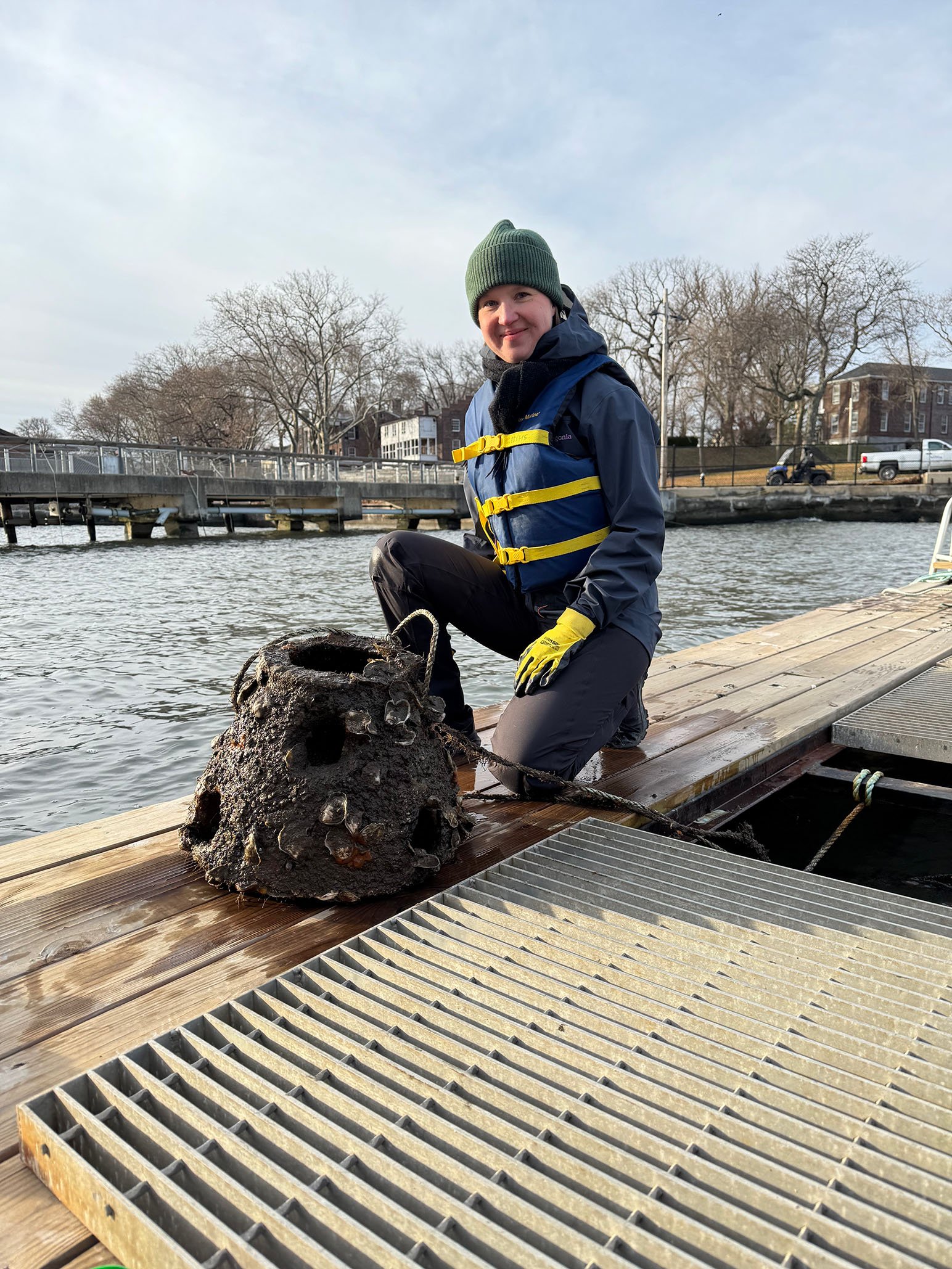
Harriina with an artificial oyster reef ball on Governors Island. Photo by Shania Rajoon-Deonarine
𝗬𝗼𝘂 𝗵𝗮𝘃𝗲 𝗺𝗲𝗻𝘁𝗶𝗼𝗻𝗲𝗱 𝗼𝘆𝘀𝘁𝗲𝗿𝘀 𝗯𝗲𝗶𝗻𝗴 𝗮 𝗯𝗶𝗴 𝗽𝗮𝗿𝘁 𝗼𝗳 𝘆𝗼𝘂𝗿 𝘄𝗼𝗿𝗸. 𝗪𝗵𝘆 𝗼𝘆𝘀𝘁𝗲𝗿𝘀? 𝗪𝗵𝗲𝗻 𝗱𝗶𝗱 𝘁𝗵𝗲𝘆 𝗳𝗶𝗿𝘀𝘁 𝗯𝗲𝗰𝗼𝗺𝗲 𝗰𝗲𝗻𝘁𝗿𝗮𝗹 𝘁𝗼 𝘆𝗼𝘂𝗿 𝘄𝗼𝗿𝗸, 𝗮𝗻𝗱 𝘄𝗵𝗮𝘁 𝗱𝗿𝗲𝘄 𝘆𝗼𝘂 𝘁𝗼 𝘁𝗵𝗲𝗺 𝗶𝗻𝗶𝘁𝗶𝗮𝗹𝗹𝘆?
Yes – oysters are a big part of my work, and there are several reasons for it.
They fascinate me because they are such an ancient life form compared to humans – they have survived mass extinctions, dramatic environmental changes, and even the movements of continents. I’m also very fascinated by their shells, because the form of the shell as we know it is totally artificial. Oysters always grow naturally in reefs, cementing one valve to another, never as individuals like you see in restaurants.
The very first time I encountered oysters – or actually oyster shell matter – was as a white pigment, when I was working as a trainee in a woodblock printing studio in Japan, in 2018. It was a very bodily, almost arresting experience to realize that I had been using a pigment made from someone’s exoskeleton.
Then, for the first time, I got truly interested: who are these animals called oysters? For many, they are a luxury element, but there is so much more behind them.
𝗬𝗼𝘂 𝗱𝗶𝗱 𝗳𝗶𝗲𝗹𝗱 𝘁𝗿𝗶𝗽𝘀 𝗮𝗻𝗱 𝘀𝗶𝘁𝗲 𝘃𝗶𝘀𝗶𝘁𝘀 𝗱𝘂𝗿𝗶𝗻𝗴 𝘁𝗵𝗲 𝗿𝗲𝘀𝗶𝗱𝗲𝗻𝗰𝘆, 𝗰𝗮𝗻 𝘆𝗼𝘂 𝘁𝗲𝗹𝗹 𝘂𝘀 𝗺𝗼𝗿𝗲 𝗮𝗯𝗼𝘂𝘁 𝗶𝘁?
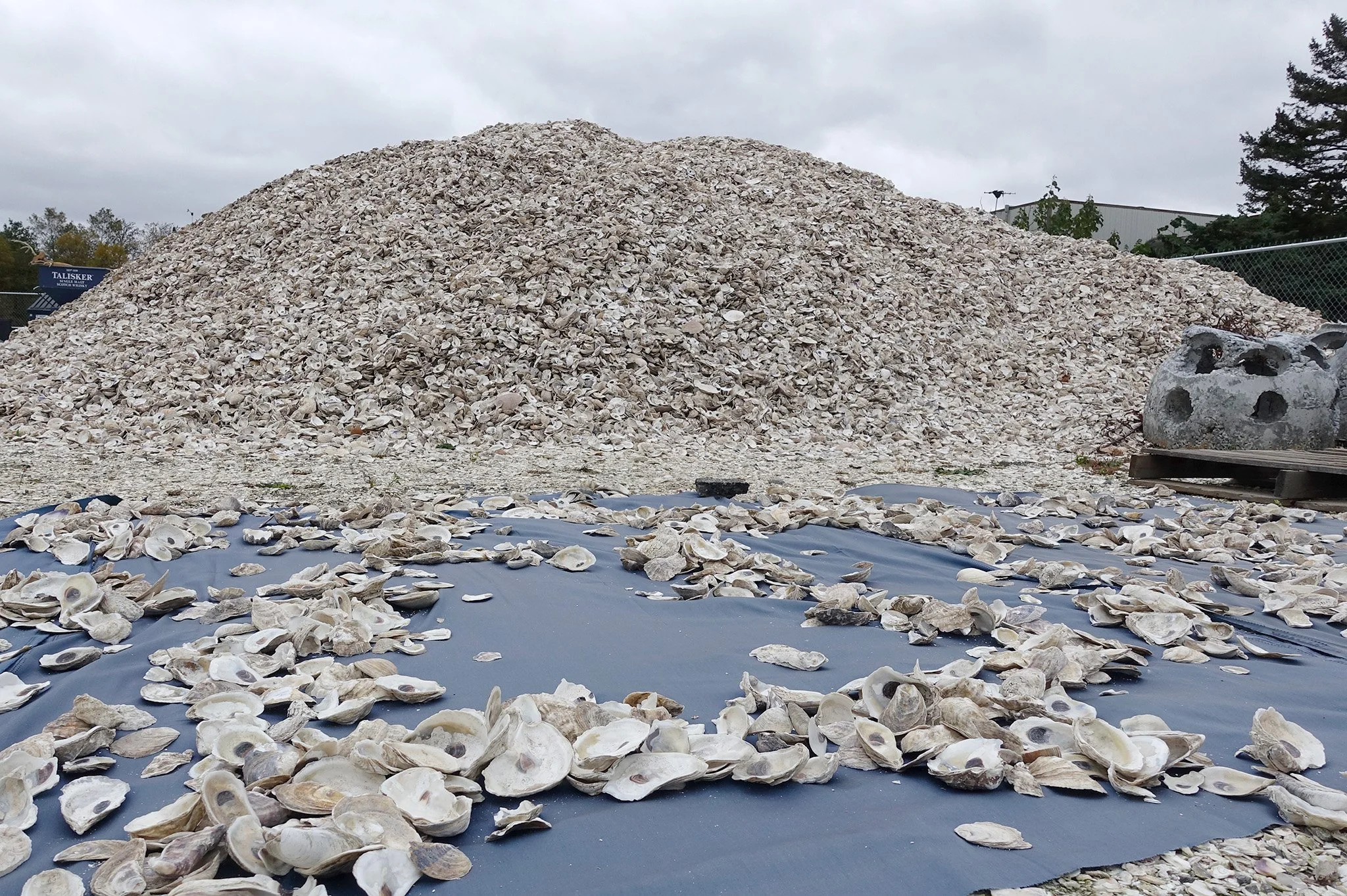
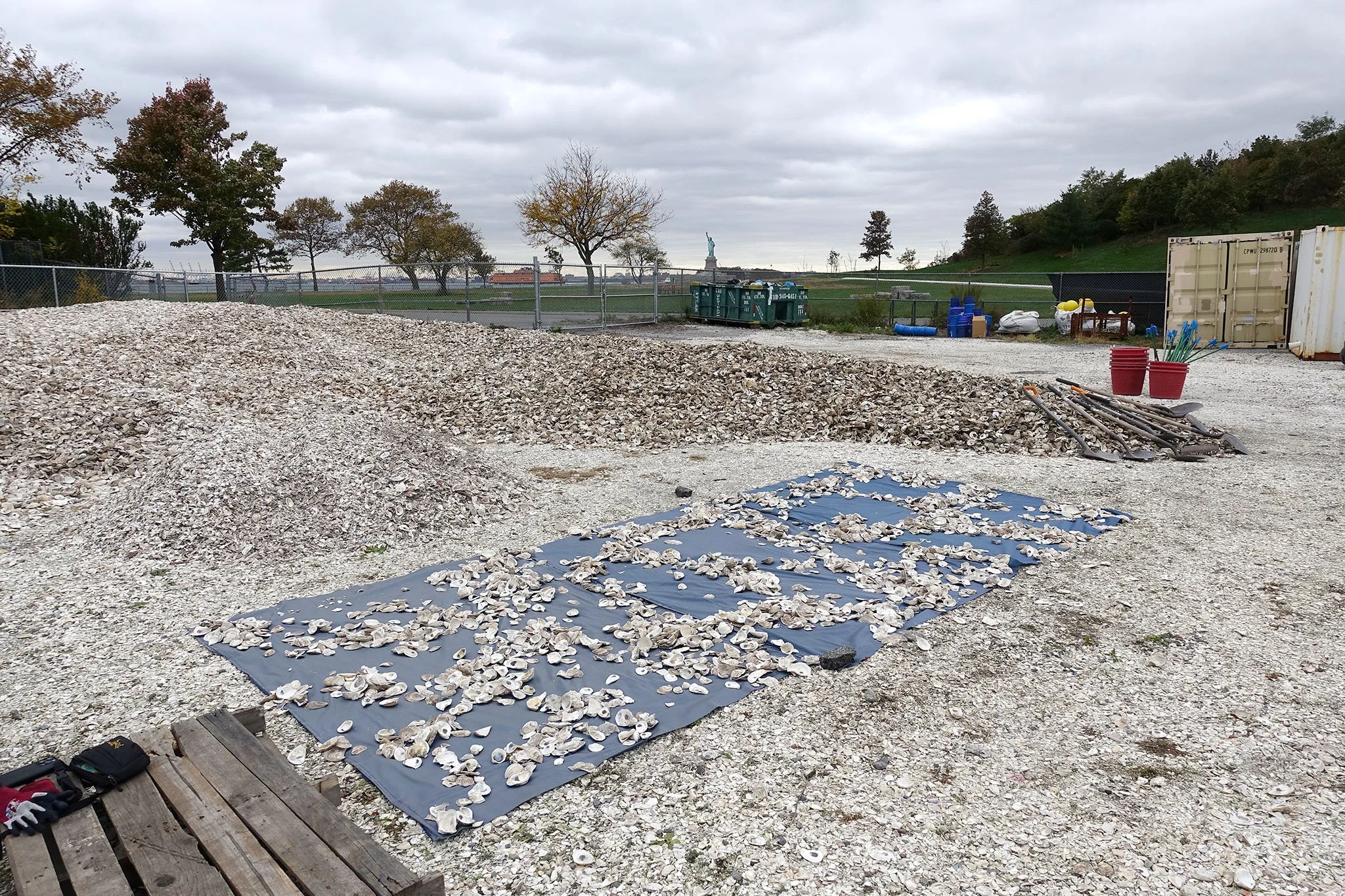
Working with cyanotypes at the Billion Oyster Project’s shell pile on Governors Island. Photo by Harriina Räinä
This was a very important part of my work in New York. I volunteered for the Billion Oyster Project, which restores oyster reefs in the city. Governors Island was especially important, as it houses a huge shell pile collecting waste-stream shells from restaurants for restoration. I also visited several sites, where oysters are kept in research stations and their health is monitored to guide new reef construction.
During my field trips, I made a number of small- and large-scale cyanotypes – a photographic method where you can create photogram-like images outdoors using sunlight. This allowed me to make images directly on site, with shells, tools used for reef building and monitoring, and even with live oysters. I was drawn to the idea that I was only borrowing what I used.
𝗪𝗮𝘀 𝘁𝗵𝗲𝗿𝗲 𝗮 𝗽𝗹𝗮𝗰𝗲 𝗶𝗻 𝗡𝗬𝗖 (𝗺𝘂𝘀𝗲𝘂𝗺, 𝗻𝗲𝗶𝗴𝗵𝗯𝗼𝗿𝗵𝗼𝗼𝗱, 𝘄𝗮𝘁𝗲𝗿𝗳𝗿𝗼𝗻𝘁, 𝘀𝘁𝘂𝗱𝗶𝗼 𝘃𝗶𝘀𝗶𝘁) 𝘁𝗵𝗮𝘁 𝗿𝗲𝗮𝗹𝗹𝘆 𝗶𝗻𝘀𝗽𝗶𝗿𝗲𝗱 𝘆𝗼𝘂?
One moment was when a scientist and a long-term volunteer of the Billion Oyster Project took me to see wild oysters in Queens. Even though oysters are functionally extinct in New York, some have survived and continue to do so. My new friends also took me sailing in Rockaway – that was magical.
I had a lot of studio visits and conversations at Triangle, for which I am truly grateful, as they helped me push my work forward. It was also very inspiring to visit studios of local and international artists during different Open Studio events, for example in Smack Mellon and the Sunset Park area in Brooklyn.
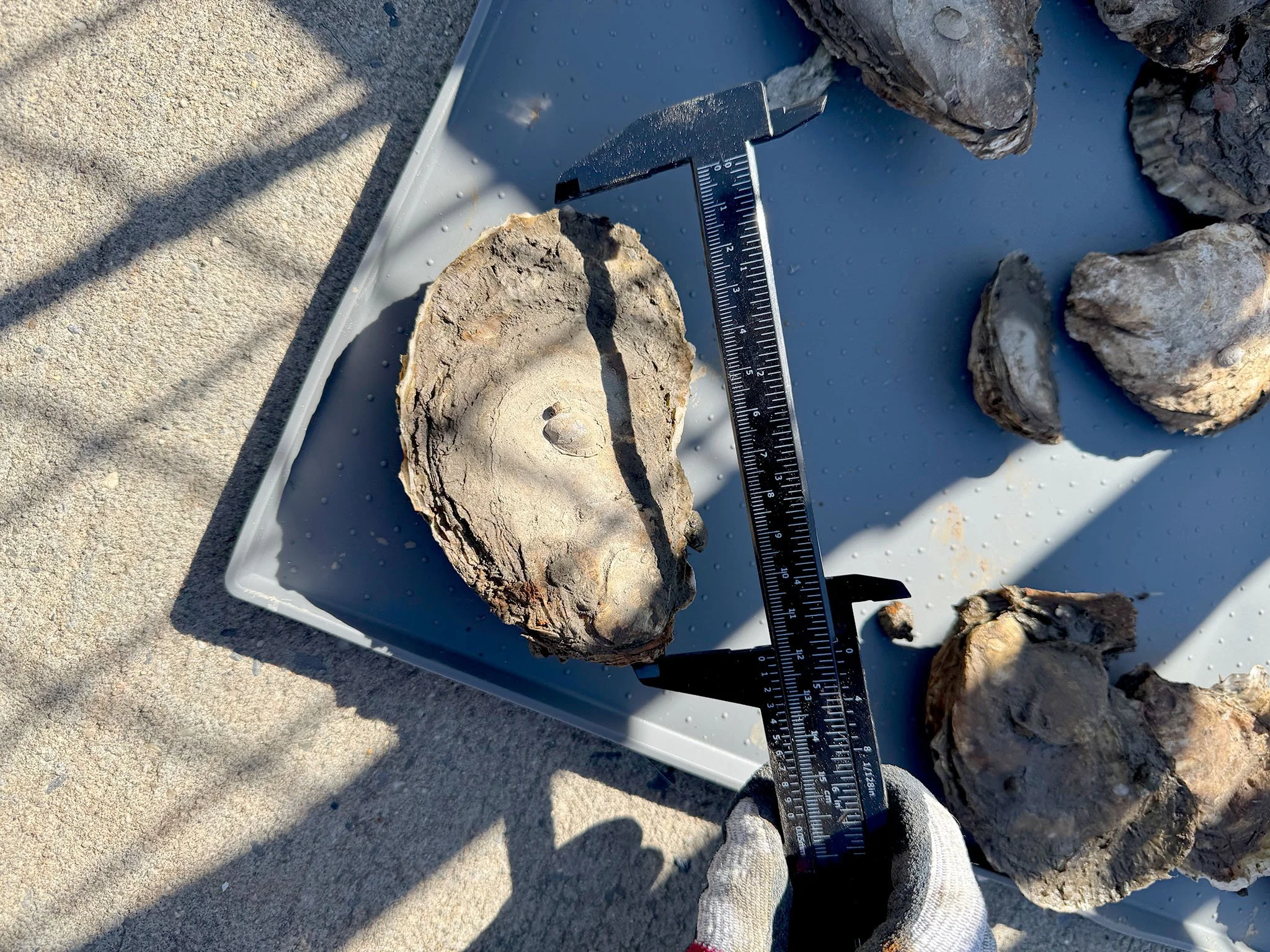
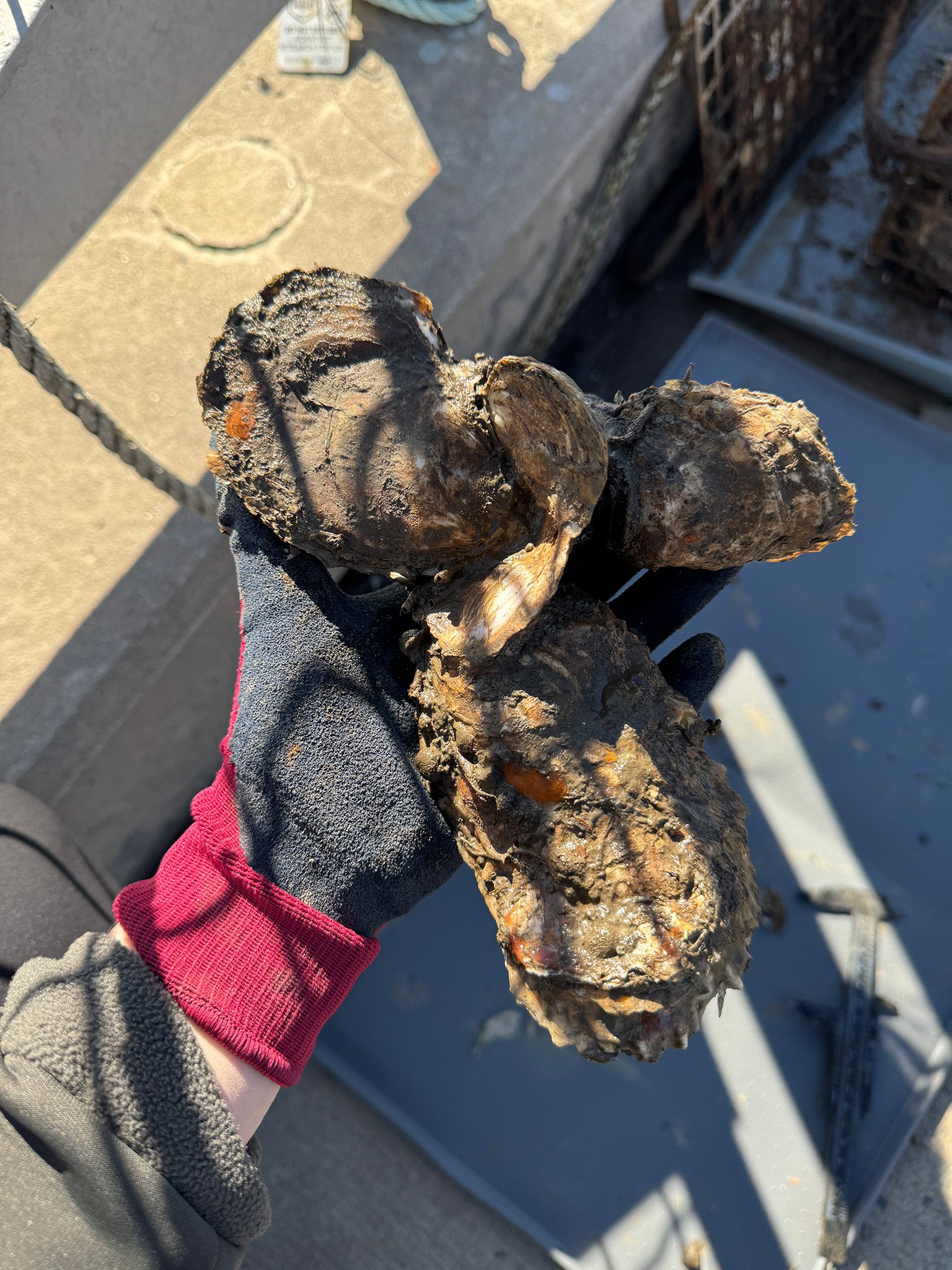
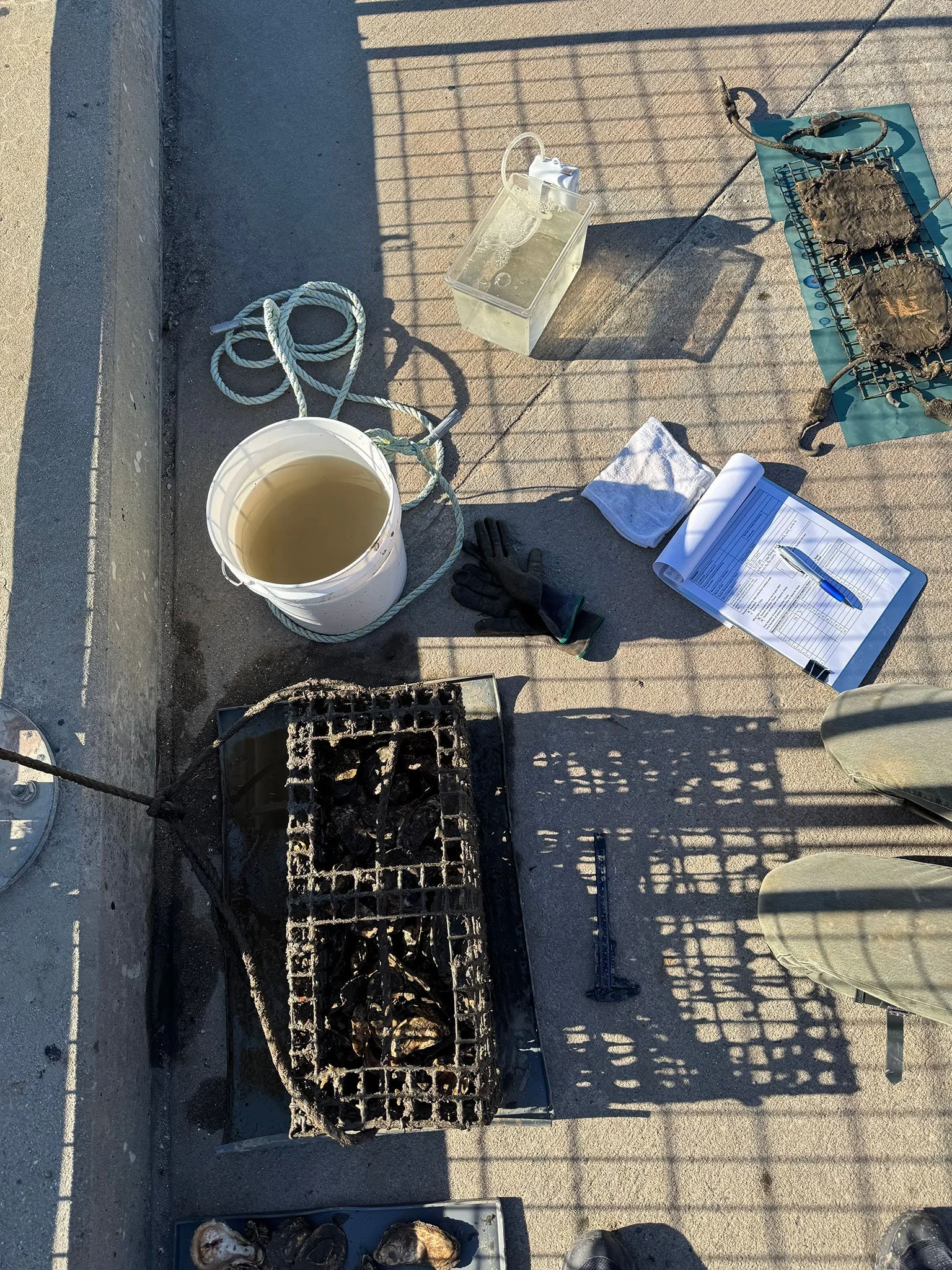
Monitoring oysters with the Billion Oyster Project at Red Hook, Brooklyn
𝗪𝗵𝗮𝘁’𝘀 𝗻𝗲𝘅𝘁 𝗳𝗼𝗿 𝘆𝗼𝘂 𝗮𝗳𝘁𝗲𝗿 𝗿𝗲𝘀𝗶𝗱𝗲𝗻𝗰𝘆 𝗮𝗻𝗱 𝗶𝗻𝘁𝗼 𝟮𝟬𝟮𝟲?
I’m having a solo show in Gallery G in Helsinki in February, presenting the works I produced in New York, and I’m really looking forward to seeing them in space. In 2026, I’ll also be finishing a small-scale outdoor sculpture for a community garden in Scotland, and starting a collaboration that will result in an exhibition at Forum Box in Helsinki in 2027.
In 2026, I also have some teaching and other printmaking-related work coming up at the University of the Arts Helsinki and at a few other universities, which I’m really looking forward to.
Harriinas residency was made possible by the Finnish Cultural Foundation, she was hosted by Triangle Arts Association and supported by The Finnish Cultural Institute in New York.
Website: harriinaraina.com
Interview questions by Emma Termonen
Published: January 6, 2026