News
The Interwoven Narratives of Indigenous Contemporary Art by Rachel Martin
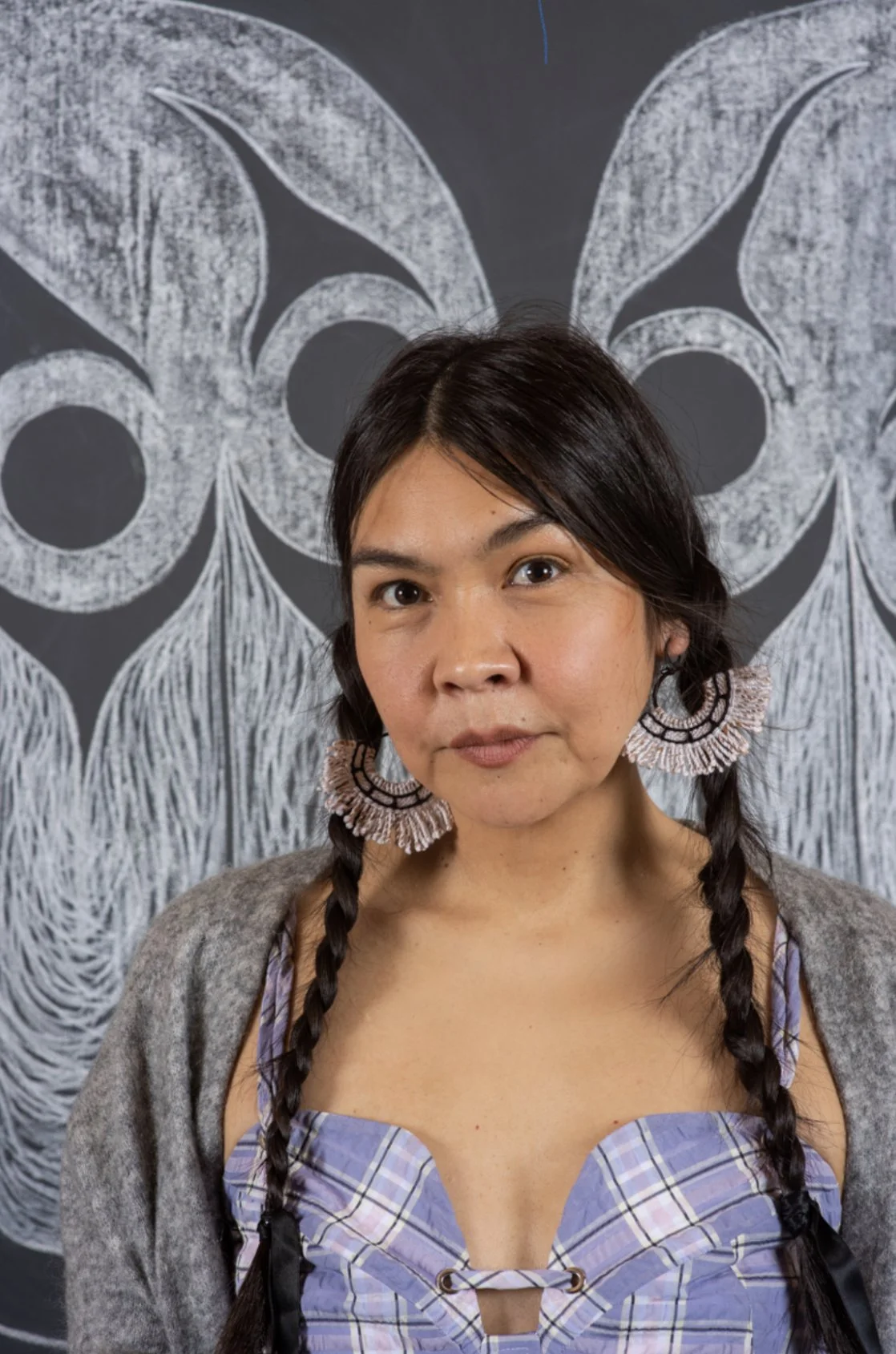
Rachel Martin is a Visual Artist, Creative Director and Co-Curator of the Gochman Family Collection.
Contemporary art has long been regarded as a mirror reflecting the times we live in, yet for Indigenous artists, this reflection carries additional layers of history, identity, and resistance. In a recent dialogue with two remarkable artists—Carola Grahn, a South Sámi visual artist from Jåhkåmåkke, Saepmie, and Sydney Akagi, a Tlingít weaver and activist from Juneau, Alaska—the conversation centered on the intersections of tradition, innovation, and the evolving role of Indigenous art in contemporary spaces. Despite our diverse geographies and artistic mediums, we share a worldview that regards land not as a commodity, but as a sacred, living entity—a relative with whom reciprocal relationships must be maintained.
The dichotomy of “traditional versus contemporary” is a construct imposed by settler society, seeking to compartmentalize Indigenous creativity and separate it from the broader art world. This binary fails to recognize that Indigenous communities have always integrated modern ideas with ancestral knowledge, creating works that transcend temporal boundaries. For many of us, art is not just a profession or hobby but an intrinsic part of life—a holistic worldview that resists external categorization. This refusal to conform is evident in the practices of Carola and Sydney, whose works challenge dominant narratives while remaining deeply rooted in cultural continuity.
In my own artistic practice, I incorporate familiar Tlingít imagery—such as hand-drawn masks and weavings—onto soft, human forms that traverse past, present, and future. These motifs, often seen in museums, are intentionally placed to provoke reflection on the displacement of cultural belongings. Museums may hold these objects, but they remain active beings, separated from their homes and families. Through gentle lines and asymmetrical curves, I create space for feminine bodies absent from colonial and patriarchal frameworks, asserting that such dominance is not part of our ancestral composition. My drawings of Chilkat weavings pay homage to a centuries-old tradition that, after near dormancy for two centuries, has experienced a powerful resurgence. This revival is not merely cultural—it is a contemporary movement, inherently political, and emblematic of resilience.
Similarly, Sydney Akagi’s weaving practice intertwines artistic innovation with land activism, continuing a lineage of Indigenous resistance and creativity. Carola Grahn’s installations—melding photography, text, sculpture, and sound—interrogate structures of power, politics, and identity, using organic materials like wood, hides, and fabric to evoke timeless connections between people and nature. Though our mediums differ, our intentions converge: to create work that documents, questions, and reflects the world as we experience it today.
Ultimately, Indigenous contemporary art is not confined by museum standards or academic classifications. It is a living continuum, carrying stories, ideas, and histories that resist erasure. As makers, thinkers, and resistors, our greatest strength lies in the connections we forge—with each other and with the land that sustains us. In this shared journey, gratitude binds us: gratitude for community, for dialogue, and for the enduring power of art to heal, challenge, and transform.
Rachel Martin is a Tlingít visual artist based in New York City and also serves as Creative Director and Co-Curator of the Gochman Family Collection. Her artistic practice explores the intersections of contemporary and traditional Indigenous worldviews, addressing identity, culture, and representation through incisive, often provocative works. Drawing on personal experience and traditional knowledge, Martin honors matriarchal contributions and challenges conventional notions of femininity. Martin uses wit, humor, and satire as curatorial tools to provoke viewers and challenge assumptions about Indigenous identity and art. Her work itself functions as a form of curating, as she assembles and examines personal memories along with modern figures and traditional Northwest coast iconography. Her dual role as both an artist and curator actively allow her to actively shape new perspectives on the ever changing role of an artist.
Listen to the Episode 14: On Indigenous takes on Contemporary Art
This essay is commissioned as part of the Withstanding Podcast Season 4. Listen to all the episodes of Season 4 from here. This program is made possible with support from the Finnish Ministry of Education and Culture.