News
What happens at the drag show… By Kareem Khubchandani
There’s something happening at the drag show. Can you feel it?
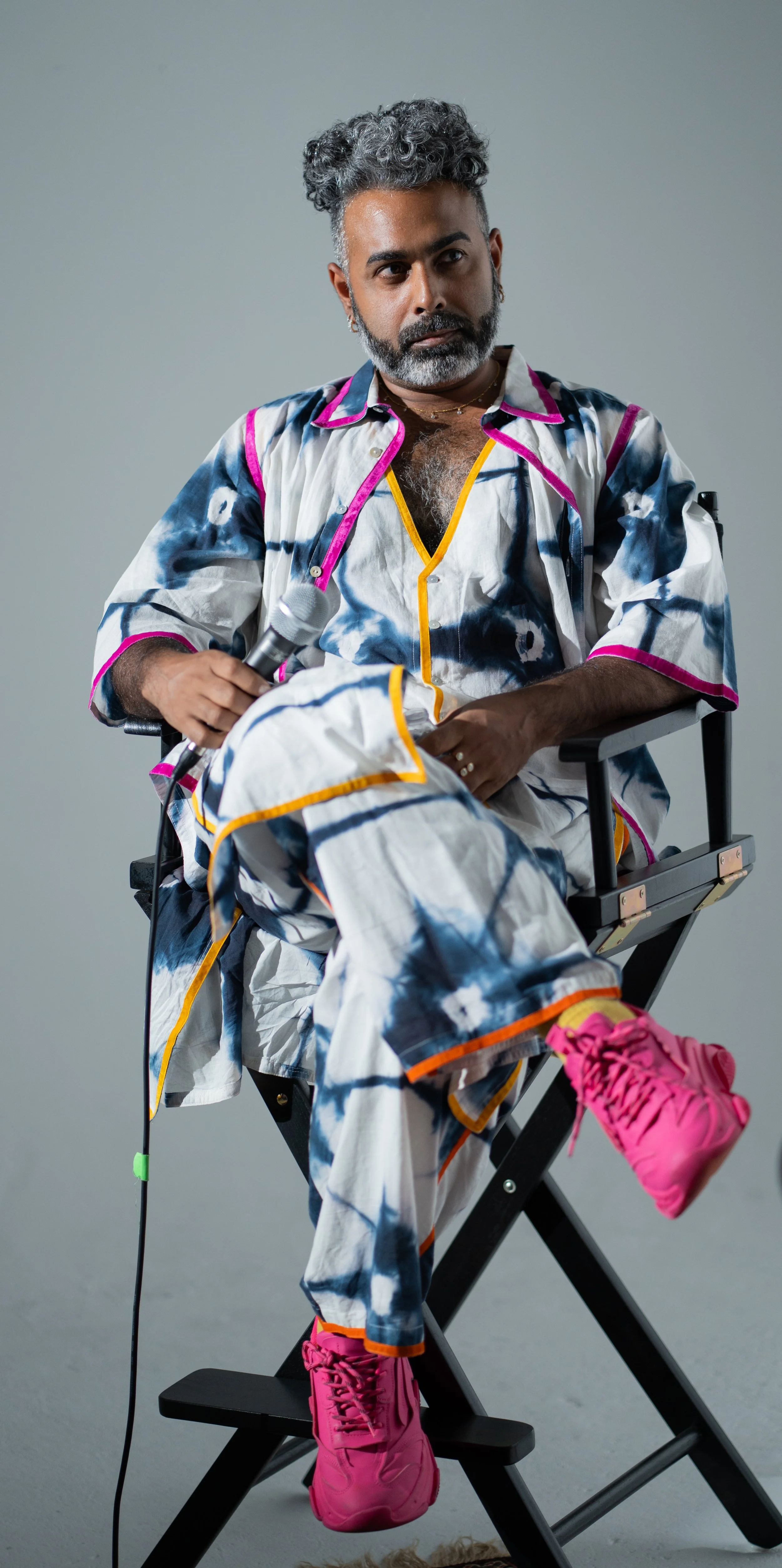
Kareem Khubchandani is the author of the award-winning books Decolonize Drag and Ishtyle: Accenting Gay Indian Nightlife. Image by Junaid Afir.
Earlier this year, I hosted a party called Dragistan, an annual showcase of drag from across South Asia and its diasporas. Emceed by everyone’s favorite desi auntie, LaWhore Vagistan (i.e., me), the night featured regional and popular dance styles, solo and group numbers, music in many different languages. As the night processed, I observed how specific people in the audience were gleeful and rapt by each different form of performance, by lavni dance, or Bengali lyrics, or Tamil rhythms—partial activations edging the audience all night long. It seemed only right to close the night with a song that was so transcendent, so magical, so ceremonious that it exceeds regional and aesthetic specificities…Celine Dion’s “My Heart Will Go On.”
I chose this song for many reasons. After working on production for the show for months, running up and down stairs in 5-inch heels for three hours, enduring the weight and pressure of girdle, hip pads, tights, and 30lb silicone breast plate, I needed a soft landing with this final number. Something simple. Something I already knew the words to lip synch to. I wanted some ease. Initially I felt a bit self-conscious about my choice—too sincere—marking me as an ageing queen, an auntie, to this youthful Brooklyn venue packed with cool diaspora kids. But of course, I embrace aunty.
Something happened to me as the song began. I could feel the audience catch their breath at the familiar opening chords. “Did I make the wrong choice? Too cheesy?” And then I felt their exhale as seemingly all 500 people sang back to me, “Near. Far.” The room vibrated. “Whereeeeever you are.” The ground shook. I too exhaled. I was not just a performer on stage, alone. I was with everyone in this room, and they were with each other.
“Fuck you LaWhore,” my friend Salman said, “Fuck you for doing ‘My Heart Will Go On’ without an ounce of irony.” “Did you hate it?” “No I loved it! It’s just what I needed.” This was the sentiment I heard over and over. “I cried.” “We just hugged.” “It was so powerful.” In any other context, the sound of this overplayed and cliché song would make me, and probably you, cringe. I won’t lie, my drag is a little bit cringe… too earnest, or outdated, or obscure, or overplayed—always enough to make you feel embarrassed, for me or yourself. But here, in a room full of queer and trans South Asian people, belting a song together made us feel something. It came not from my performance alone, but from the hours we had already spent in there witnessing queer and trans artistry. Performances by people whose families have survived partitions, migrations, and indentures, by artists who summoned heroes and divas through their gestures and song choices. It came from spending twenty-eight years with this song. Histories were in the room.
As I dropped the “The Heart of the Ocean” into the forest of eager hands, I too had been transformed.
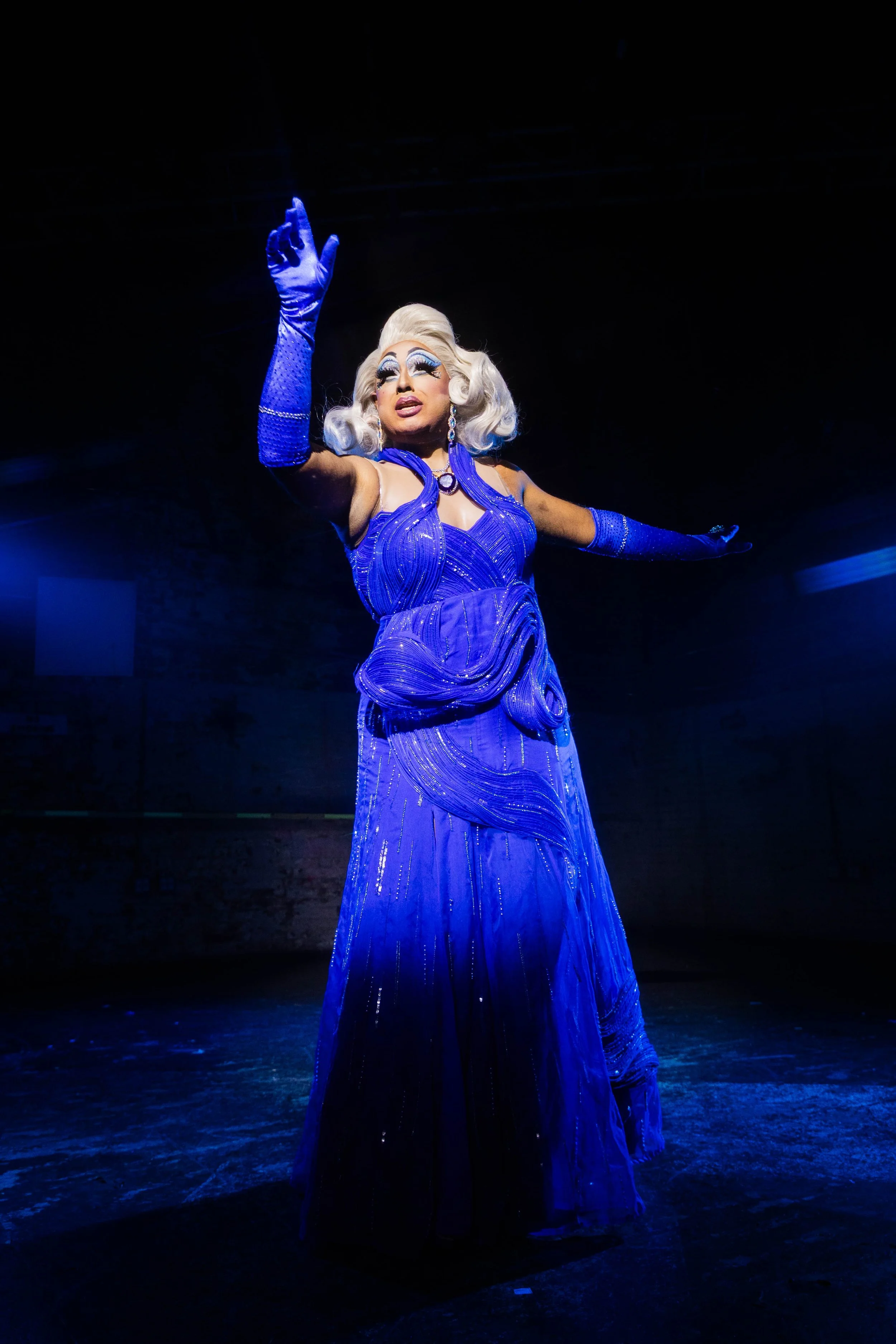
Image by Mettie Ostroswki (July 2025, Brooklyn).
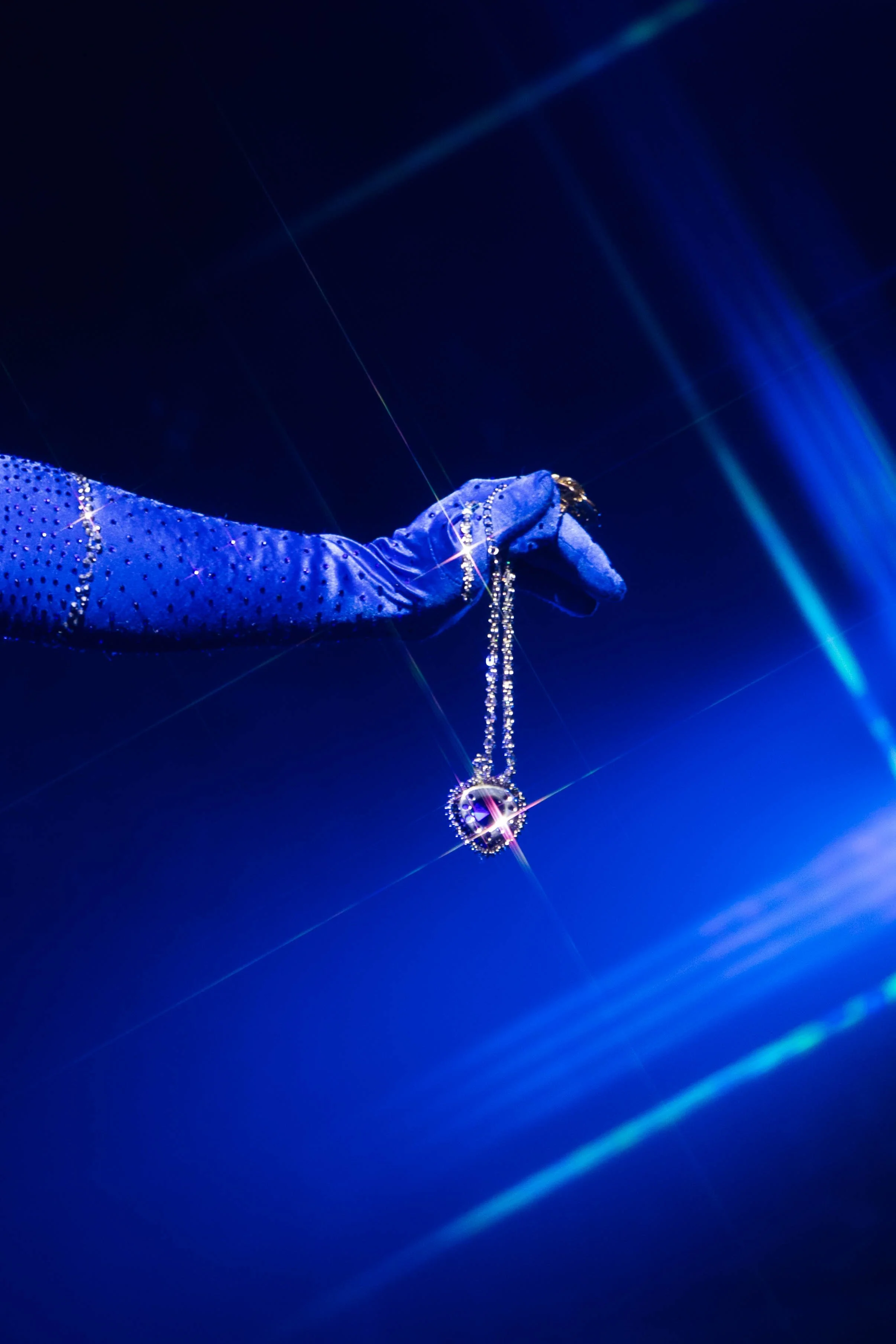
Image by Mettie Ostroswki (July 2025, Brooklyn).
“A Two Spirit Elder once told me and other drag artists, while we were performing, what we’re doing on stage is ceremony.” When Feather Talia said this during the Indigenous Drag conversation at the Leslie-Lohman Museum of Art, I smiled in recognition—smiled to no one in particular as I was listening to the recorded podcast in a coffeeshop. It made so much sense.
I am a scholar trained in Performance Studies, a field that takes seriously the body’s power to wield aesthetics in order to live inside of politics, to critically respond to politics. In our field, we talk a lot about ritual, about performance’s ability to transform our understanding of ourselves and other’s understanding of us as we experience these embodied processes as a collective. At drag shows, I see ritual in full effect. From the threshold of the door that invites you into a world where gender explodes, and that spits you back out into the “real” world after the show. From the welcome by the emcee, to the denouement of a ballad, to the crash of a voguer’s dip, to the intimate exchange of dollar bills, to the baring of flesh in a reveal. So many other rituals are recalled in these gestures: weddings, christenings, coming of age practices, funerals. When the night ends, and the bar regurgitates us back into the cold outside, we emerge a little bit changed. Gender has expanded. Sadness has softened. Beauty seems more available.
To understand drag as ceremony pushes against the flattened representation of drag on our screens. Yes, I love watching Drag Race, and am always in the process of making peace with its commercial project. I mean, it has given platform to Egyptian-Palestinian queen Halal Bae, Kanaka Maoli queen Sasha Colby, and Indigenous Bolivian artist Inti amongst many other fierce figures I admire. But drag, encountered only on screen, misses the transformative dialogue happening between artist and audience. The collectivity so crucial to ritual and ceremony.
Go to the show! Watching drag on the commercial screen, just isn’t enough.*
I tend to talk about LaWhore as a reluctant drag queen. I first got on stage to perform for a fundraiser, what was meant to be a one-time only performance. But the feeling of being on stage, experiencing audiences respond gesture by gesture, lock eyes with me, or even lip synch / sing my track back to me, keeps me coming back to the stage! Drag is never just about my own artistry, it is about what happens between me and the audience. It’s a high I keep chasing. In pursuit of this resonance, I’m always asking as I craft a performance, “What can I do to invite the audience in.”
And I can’t stop writing about drag. The opening line in my first book Ishtyle: Accenting Gay Indian Nightlife is “I fucking love drag queens.” There, I talk about the work that drag does to ground nightclub-goers in a shared sense of aesthetics, pleasures, and commitments. In Decolonize Drag I give examples of the times that I have been pulled into drag’s ritual practice, to both recall histories of colonial violence but also to laugh raucously in the face of power. The performances I describe in Decolonize Drag invent new worlds for audiences to encounter painful histories. Like the liminal space of ritual, drag suspends audiences in a new temporality, where laughter and erotics become tools to encounter colonial pasts. And in my most recent book Lessons in Drag, I talk about how drag has made room for my own grief since losing my mother three years ago. Mourning in the club is not simply about performing trauma to elicit sympathy from the audience, but, as all rituals go, a way of activating all present to feel present.
What happens at the drag show doesn’t just stay there. What happens at the drag show transforms us. It arms us to live in a world that can’t even conceive how beautiful we are. Go! See a show! Give yourself to the ritual. Let yourself fall, Alice-like, into the worlds that drag artists create. And, of course, tip your performers!
*I want to note that I’m specifically referring to the high production, corporatized drag here. I understand that not all drag can be experienced live. The COVID 19 pandemic made apparent what many disabled drag artists were already telling us, that nightclubs are not always conducive to all kinds of bodies and pleasures. Beautiful, ritualistic, awe-inspiring drag was happening online before COVID 19! I have been amazed at how digital drag retools the rituals of the nightclub for online worldmaking, on Twitch, YouTube, Facebook, Instagram and elsewhere.
Kareem Khubchandani is the author of the award-winning books Decolonize Drag and Ishtyle: Accenting Gay Indian Nightlife. His new book, Lessons in Drag: A Queer Manual for Academics, Artists, and Aunties is now out from Brandeis University Press. Kareem is also co-editor of the Lambda Literary-nominated Queer Nightlife, guest editor of Text and Performance Quarterly’s “Critical Aunty Studies,” and associate editor for GLQ: A Journal of Lesbian and Gay Studies. He is Associate Professor of theater, dance, and performance studies at Tufts University, and for the 2025-26 year he is F. O. Matthiessen Visiting Associate Professor of women, gender, and sexuality studies at Harvard University. He performs as LaWhore Vagistan, your favorite aunty’s favorite aunty; please follow her on Instagram at @lawhorevagistan.
Listen to the Withstanding Episode 11: Indigenous Drag Excellence:
This essay is commissioned as part of the Withstanding Podcast Season 4. Listen to all the episodes of Season 4 from here. This program is made possible with support from the Finnish Ministry of Education and Culture.