News
Permanence, Mobility, Place and Land - A Sámi Perspective on Architecture as Relationship by Eve Sarapää
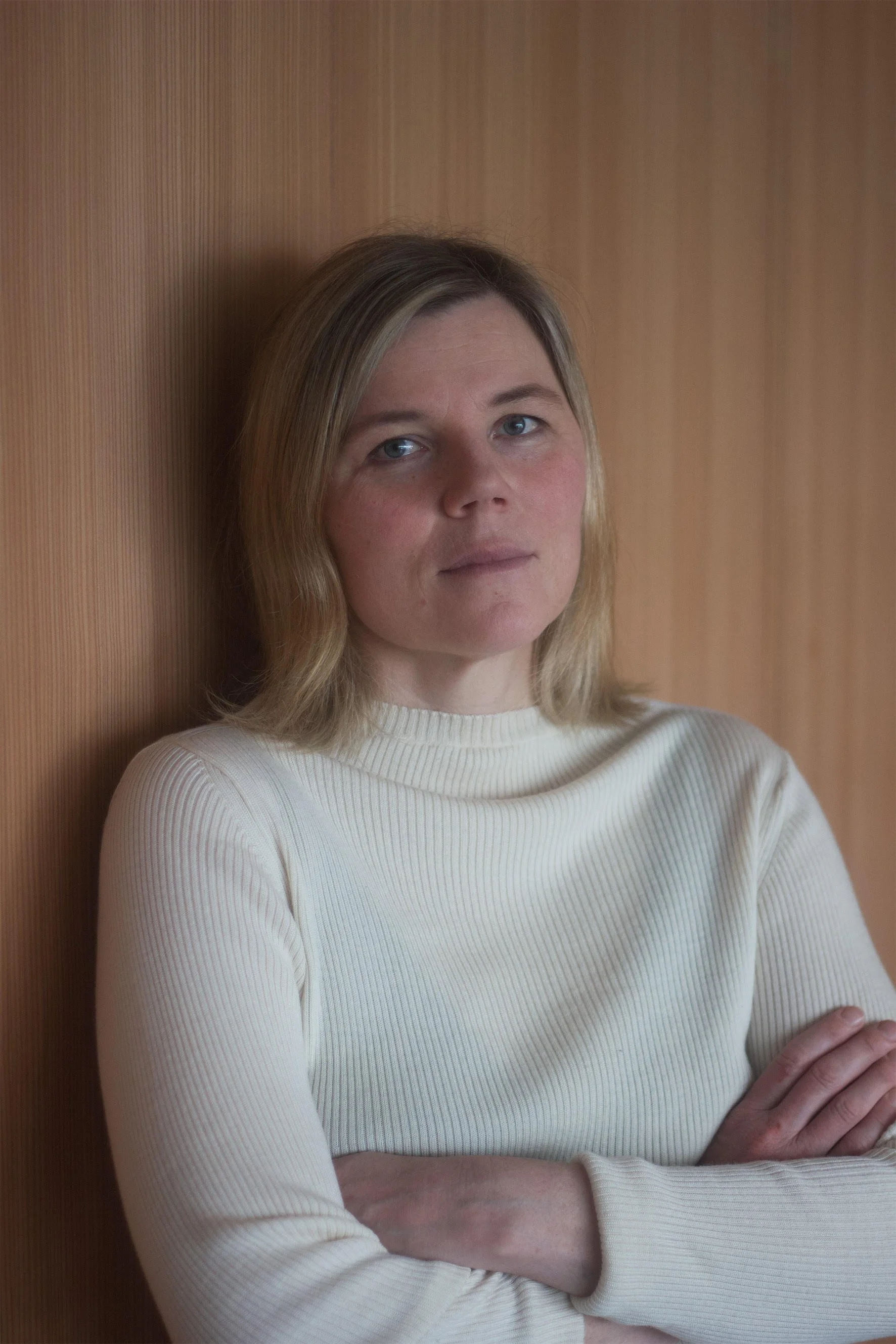
Eve Sarapää is an architect who specializes in adaptive reuse, wooden architecture, and Sámi architecture. Through her practice and research, she works to decolonize architecture and ignite wider conversation about Sámi architectural epistemologies in Finland. Photo by: Franka Oroza.
In architecture, we fluently use concepts such as permanence, mobility, place and land. They are often treated as self-evident, even though their meanings are constructed in fundamentally different ways depending on whether the built environment is examined through a Western or an Indigenous worldview. In this article, these concepts are approached from a Sámi perspective, in which land is not a passive resource and a building is not an endpoint, but part of a temporal and relational continuum.
As a Sámi architect specializing in renovation and adaptive reuse, I am interested in reflecting on how settler-colonial¹ assumptions about permanence, ownership, and control have shaped Western architecture. The central ethical questions of building are therefore not related to new technical solutions, but to ways of understanding time, materials, and responsibility as parts of a living whole.
When Building Becomes a Claim
settler is a historical and political concept referring to populations that establish themselves on already inhabited lands and transform the governance, use, and meaning of land into a system based on ownership, boundaries, and permanence.² A settler does not refer only to an individual historical actor, but to an ongoing structure. Land leveling, the clearing of nature, and the articulation of boundaries—plots, fences, and grid plans—express land as a neutral surface to be modified, divided, and controlled. Building becomes a concrete act of appropriation, in which permanence, demarcation, and ownership define the value of space.
Indigenous peoples are peoples whose cultures, languages, and knowledge systems have developed in a specific place over long periods of time as part of the historical continuum of land and other forms of life.³ They have not settled on someone else’s land; rather, their existence is an inseparable part of that place. Land is not an object but a relationship: a living whole of which humans themselves are also a part. Power, responsibility, and spatial rights are therefore not merely agreements between people, but are shaped in relation to the continuity of the living world, in which land and other life forms are full participants. Permanence is based on the continuity of knowledge, practices, and relationships, not on material eternity.
Mobility – the circulation of materials, flows, and relations
In architecture, mobility is often associated with human movement or the relocatability of buildings.⁴ In this article, I expand the use of the concept through Sámi building practices that are grounded in temporal and material relationships, understanding the built environment as a circulation of materials, flows, and temporal relations.
In Sámi building traditions, materials are not consumed to exhaustion but are temporarily bound as part of a longer temporal continuum. Structures are traditionally lightweight, demountable, and repairable. The value of materials is based on their ability to move, transform, and continue their lives in different contexts.
Material choices are not merely technical solutions, but part of a relationship with land, animals, people, and future generations. A building is not an endpoint, but a pause in the movement of materials: materials have a past before construction and a future after it. Building does not consume future possibilities, but leaves room for continuity. This is not based on scarcity, but on extremely precise optimization of time, energy, materials, and the reading of the environment.
In this context, the concept of mobility makes visible that energy, water, soil, and labor are not inexhaustible, but move within a system that architecture either interrupts or sustains. Mobility poses an ethical question: from whom has the material been taken, where has it been, and where can it continue?
In Finnish demolition and circular economy discourse, the focus is often on technical questions: the optimization of material flows, reusability, and efficiency. From a Sámi perspective, however, the problem is not primarily technical but cultural. Buildings are designed to be permanent, yet their service life is short; materials are long-lasting, but they are assigned only a single function. When use changes, material becomes waste. The issue is not material properties, but the relationship to time, use, and responsibility.
Permanence Emerges from Movement
omadism is a concept also used by Sámi people themselves to describe certain livelihoods and forms of movement.⁵ Historically, however, within colonial governance and research, nomadism has been detached from its context and interpreted as evidence of a lack of a permanent relationship to land.
In a Sámi context, nomadism does not mean constant wandering, but seasonally structured dwelling and movement that follow the rhythms of nature, animals, weather, and natural cycles. Areas connected to livelihoods are located in different places, and their use is based on precisely situated knowledge passed down from generation to generation. Place is not a single permanent point, but a network of places activated over time.
Permanence is therefore not based on a single building or plot, but on repetition across time. Spatial order does not disappear through movement, but becomes visible precisely through it: places are used in ways that allow land, vegetation, animals, and waterways time to rest and regenerate. Movement is not a reaction to a lack of resources, but a means of preventing their depletion. The traditional Sámi way of life represents a form of high ecological intelligence that enables the use of land without overburdening it.
Nomadism is not an identity, but a manifestation of particular livelihoods and relationships. Reindeer herding makes movement especially visible, but temporality and seasonality are also present in Sámi ways of life based on fishing, hunting, and trade.
This mobility has been widely misinterpreted. In Sámi reality, movement has not been a reason for not belonging to a place, but a way of inhabiting it, caring for land, and ensuring its continuity for future generations.
Relational Thinking in Architecture
Since the Enlightenment, reality has been structured into separate parts—subject and object, nature and culture, human and environment—in order to make it analyzable, measurable, and controllable. Holistic thinking has sought to respond to the fragmentation of modern thought, but often still from the position of an external observer.⁶
In the Sámi worldview, reality is not understood as a set of parts, but as relationships, in which humans, land, animals, movement, seasonal rhythms, and building are inseparably intertwined. Land is not a resource or a backdrop, but an active and remembering whole. Place is not a site but a relationship, and building is part of this relationship—a way of being in the world, not a means of controlling it.
This way of understanding reality can be described as relational: meanings are not given, but emerge and sustain themselves through relationships that are lived, cared for, and continuously renegotiated.
Repair as Continuity of Life
From a Sámi relational worldview, land is not a background condition for building but an active participant. A building site is not merely a plot, nor are materials neutral raw resources, but part of the same living whole from which everything built originates and to which it inevitably returns.
The use of materials is not a technical but a relational question. The longer a material remains in use, the more it is repaired and the less it is demolished, the fewer relationships with land and other life forms are broken. This is not a sustainability program but an ancient way of life: land, animals, vegetation, and humans have long been understood as inseparable, and material use has always been tied to need, circulation, and limitation.
From a relational perspective, repair is not a building-technical operation, but a way of positioning oneself within a responsible relationship with land, materials, and time. Repair is the primary form of building. A building is not a disposable artifact, but a material continuum whose value grows through use and change.
Demolition is an exception that requires justification, because it breaks existing relationships: the material taken from the land, the labor bound to it, and the lived history embedded in it. Waste is not a by-product but a sign of a failed relationship. Waste represents incorrect extraction, excessive quantity, or material in the wrong place.
Relational, repair-led building returns architecture to its fundamental question: not what is built, but how one lives with it. Repair and reuse are not compromises, but the ethical core of architecture.
Architecture as Part of a Living Relationship
Relational thinking shifts the focus of architecture from objects to relationships. The built environment is not a separate layer placed on top of nature and life, but part of the same temporal and material continuum.
In the era of climate and biodiversity crises, this does not call for new technical solutions, but for a change in how time and change are understood. Building is not a continuous new beginning, but part of a long chain in which every decision shapes future possibilities.
Relational thinking arising from Sámi and other Indigenous worldviews reminds us that the future does not require new innovations, but the ability to learn from the old.
Dethinking⁷ the Aesthetics of Architecture
In the Western architectural tradition, aesthetics have been grounded in form, permanence, and visual order. Vitruvius’ triad firmitas–utilitas–venustas established durability, functionality, and beauty as the core values of architecture, with beauty understood primarily as a harmonious, finished, and viewable quality.⁸
A building is understood as an object whose value is measured through proportions, clarity, and timelessness. The aesthetics of contemporary mainstream architecture also support the logic of control, ownership, and consumption.⁹
Relational thinking challenges these premises. When a building is not primarily an object but part of a network of relationships, aesthetics cannot be based solely on how a building looks, but on how it behaves over time.
Beauty shifts from form to relationships: to how little a building takes, how much it preserves, and how it withstands use, change, and wear. Attention to material circulation, adaptability, spatial generality, and clarity are not aesthetic compromises, but prerequisites for a long building life cycle.
In Sámi culture, beauty is the result of a proper relationship between human, material, and environment. An object or building is beautiful when it functions, withstands use, and is made with respect for the material and its origin—when it remembers the past and takes the future into account.
The starting point for this article was Season 4, Episode 2: On Indigenous Architecture, which opened discussions on Indigenous architecture, spatiality, and relationships to land. The themes raised by the podcast served as a catalyst to pause with familiar concepts and re-examine them from a Sámi and relational perspective.
References and Inspirations
“Kenen maa, kenen ääni? — Saamelaisten ja suomalaisten suhteet esihistoriasta nykypäivään”, Veli-Pekka Lehtola, 2025
“It Speaks to You”, Liisa-Rávná Finbog, 2023
“Terveisiä Lapista”, Nils-Aslak Valkeapää, 1971
¹Oxford English Dictionary, “Settler”
²Oxford English Dictionary, “Settler colonialism”
³United Nations, Indigenous Peoples, United Nations Permanent Forum on Indigenous Issues
⁴Oxford English Dictionary, s.v. “mobility,” Oxford University Press
⁵Encyclopaedia Britannica, “Nomadism,” Encyclopaedia Britannica
⁶Merriam-Webster. “Holism.” Merriam-Webster Dictionary.
⁷Dethinking refers to the deliberate process of undoing inherited modes of thought by unlearning their underlying assumptions, categories, and hierarchies in order to make space for alternative, relational ways of understanding the world.
⁸Vitruvius, De architectura, I.3. Vitruvius’s triad firmitas–utilitas–venustas establishes durability, functionality, and beauty as the foundational values of architecture, in which beauty is understood above all as a harmonious, complete, and visually apprehensible quality.
⁹Pallasmaa 2005. Contemporary mainstream architectural aesthetics often supports logics of control, ownership, and consumption, in which space is understood as a governable, visually possessable, and marketable object.¹
Eve Sarapää is a Helsinki-Based Finnish-Sámi architect with roots in Ohcejohka (Utsjoki).
Sarapää studied architecture at Aalto University and the Oslo School of Architecture and Design. She founded Architects Sarapää in 2009 and with new partners joining in 2023, she now works at Sarapää Oroza Hartiala Architects. Their practice is committed to preventing demolition by exploring how buildings can be thoughtfully reused and repurposed, emphasizing sustainable infill projects and careful integration of new architecture into existing urban structures.
In 2020, Sarapää was the Architect in Residence together with Franka Oroza at the Finnish Cultural Institute in New York.
Listen to the Withstanding Episode 12: On Indigenous Architecture
This essay is commissioned as part of the Withstanding Podcast Season 4. Listen to all the episodes of Season 4 from here. This program is made possible with support from the Finnish Ministry of Education and Culture.