News
The Finnish Maternity Box and Other Reasons to Keep Going
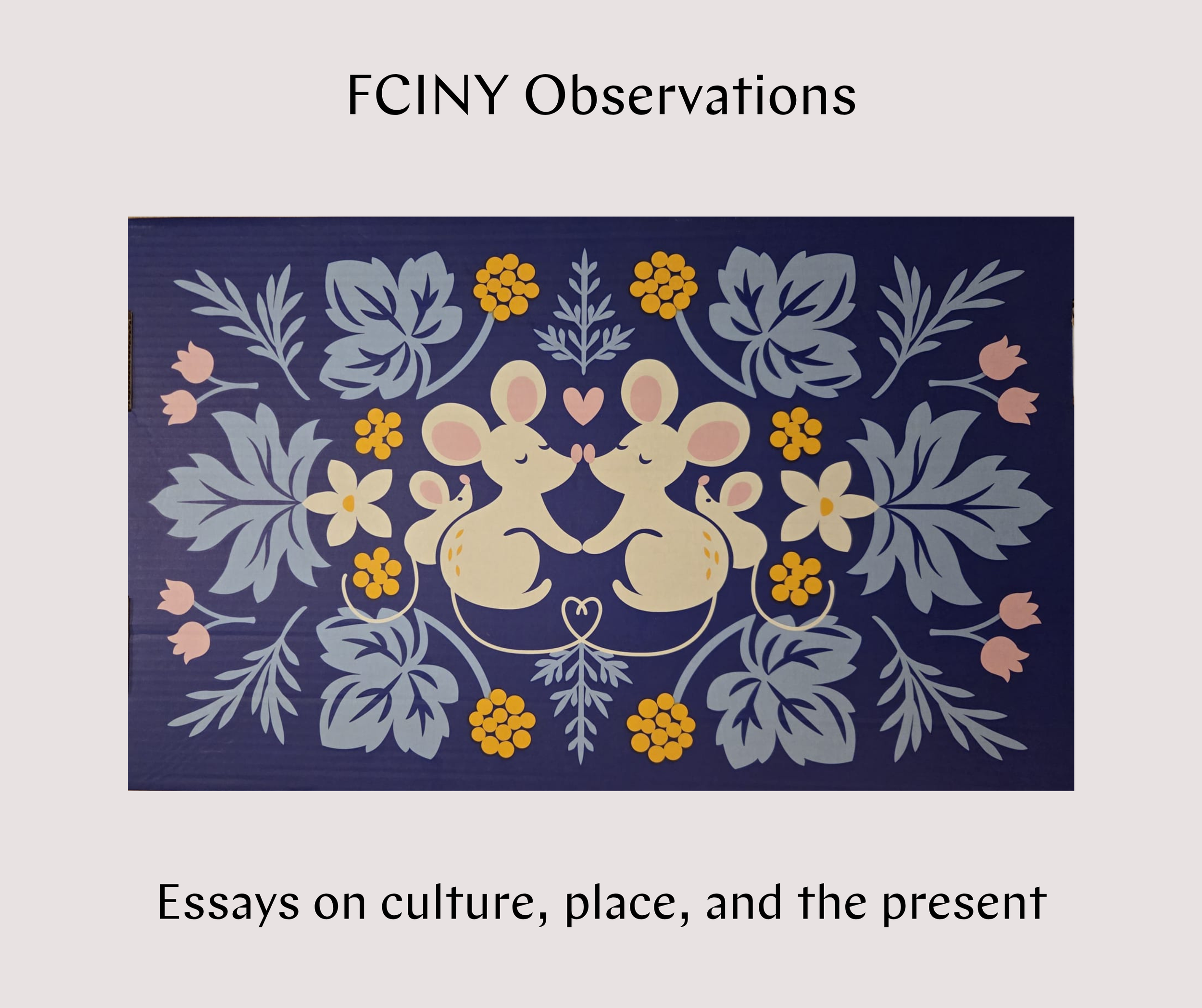
Design of the Finnish Baby Box 2025 cover by Heli Hyppönen
The Finnish Cultural Institute in New York's recurrent essay series, FCINY Observations, presents cultural commentary at the intersection of Finnish and New York perspectives.
Designing Motherhood: Things That Make and Break Our Births is a traveling exhibition, born as a book and a research project, then shown across the United States and at ArkDes in Stockholm, and currently on view at the Museum of Arts and Design in New York. The show examines the design of reproductive health across its full arc: from contraception to birth, from the tools of care to the systems that deliver or withhold it.
Right at the entrance of the exhibition space, two boxes sit next to each other. One is the Finnish maternity package, the äitiyspakkaus, a cardboard box distributed by Kela, Finland's Social Insurance Institution. The box has been offered to every expectant parent in the country since 1949¹. Its size is not accidental. The box itself is designed to function as the baby's first bed as the bottom serves as a mattress. The other is the NYC Baby Box, a newly launched initiative by New York City, piloted at four public NYC Health + Hospitals locations since 2025, making it one of the first American cities to offer a similar universal welcome to its newborns². Seeing them side by side, there is something hopeful about a monologue finally becoming a conversation.
The Finnish baby box was not born from abundance. It emerged in 1937 from a country with a high infant mortality rate and families who often lacked the basic means to receive a new child. The box was also a deliberate route into the healthcare system, since to receive it, you had to visit a prenatal clinic before your fourth month of pregnancy. By 1949, the grant became universal regardless of income³. Around two thirds of Finnish mothers choose the box rather than the 210 € cash alternative, a proportion that is even higher among first-time parents⁴. Over sixty countries have since drawn inspiration from the model⁵.
Design, in this context, is not a visual language or a luxury product. It is the architecture of a system.
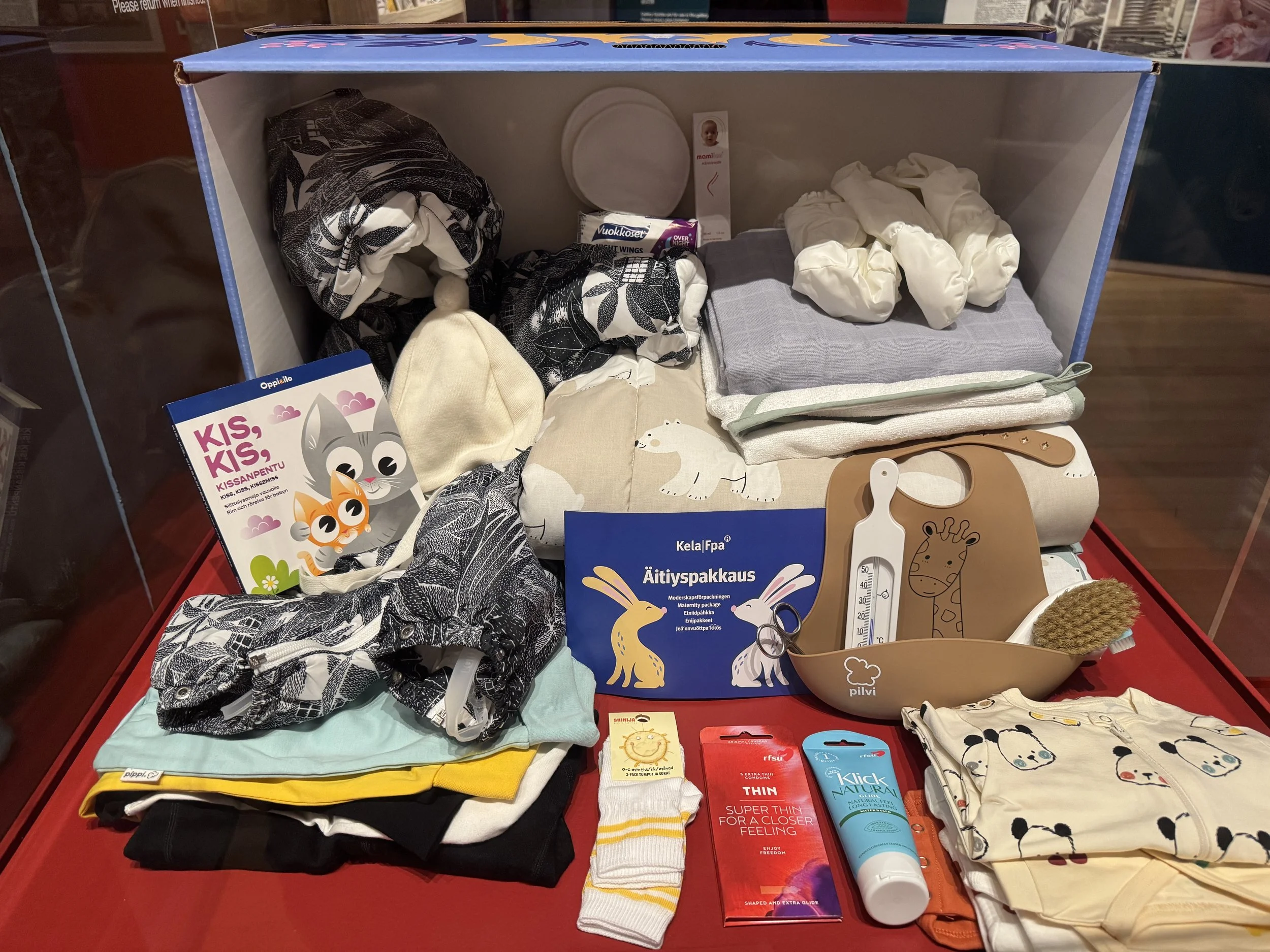
The Finnish Baby Box from the exhibition – Designing Motherhood: Things that Make and Break Our Births
Photo by Eva-Li Teir
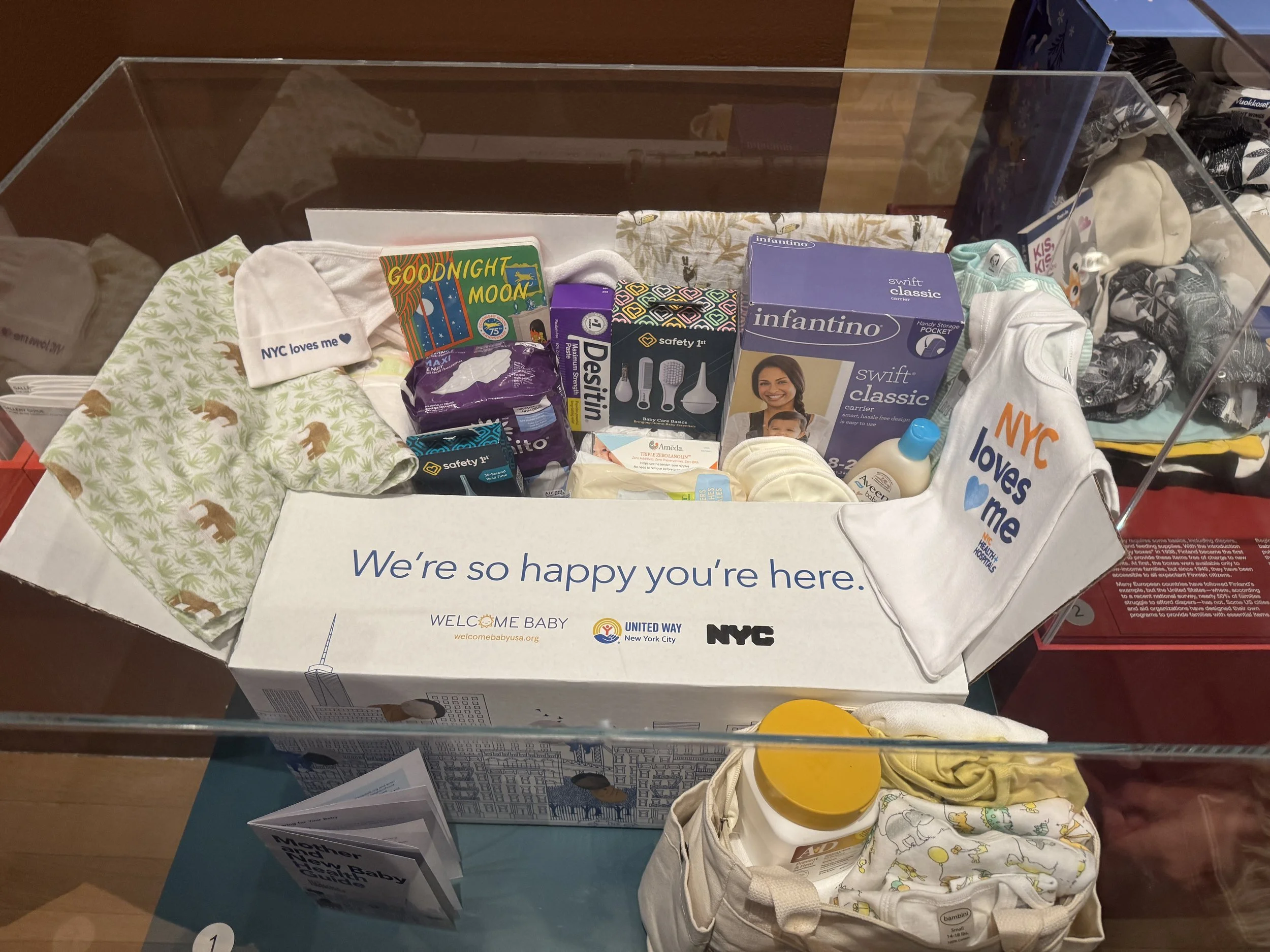
The NYC Baby Box from the exhibition – Designing Motherhood: Things that Make and Break Our Births
Photo by Eva-Li Teir
The exhibition makes this visible across many scales. Smaller objects, IUDs from different decades, early contraceptive pills, maternity clothing, sit alongside larger structural questions like community birth centres, campaigns to counter racial inequity in obstetric care and the economics of who gets to give birth safely and where.
IUDs were routinely inserted without pain relief, changed not through proactive reform but only after the standard of care was formally revised⁸. Meanwhile, the current Finnish government has introduced cuts that fall disproportionately on those already most vulnerable, including low-income women and single parents. And Finland's maternal mortality rate of 11.5 per 100,000, while lower than the US figure of 18, offers little cause for celebration when compared to leading countries.
While New York and dozens of other places look to Finland's model, there is much Finland could learn from approaches developed elsewhere: from indigenous baby-wearing traditions, to community doula programmes in American cities actively working to close the maternal mortality gap for Black mothers, to the home-birth infrastructure of the Netherlands. The Finnish maternity package still is a brilliant piece of design. But it should be just a node in a much larger conversation.
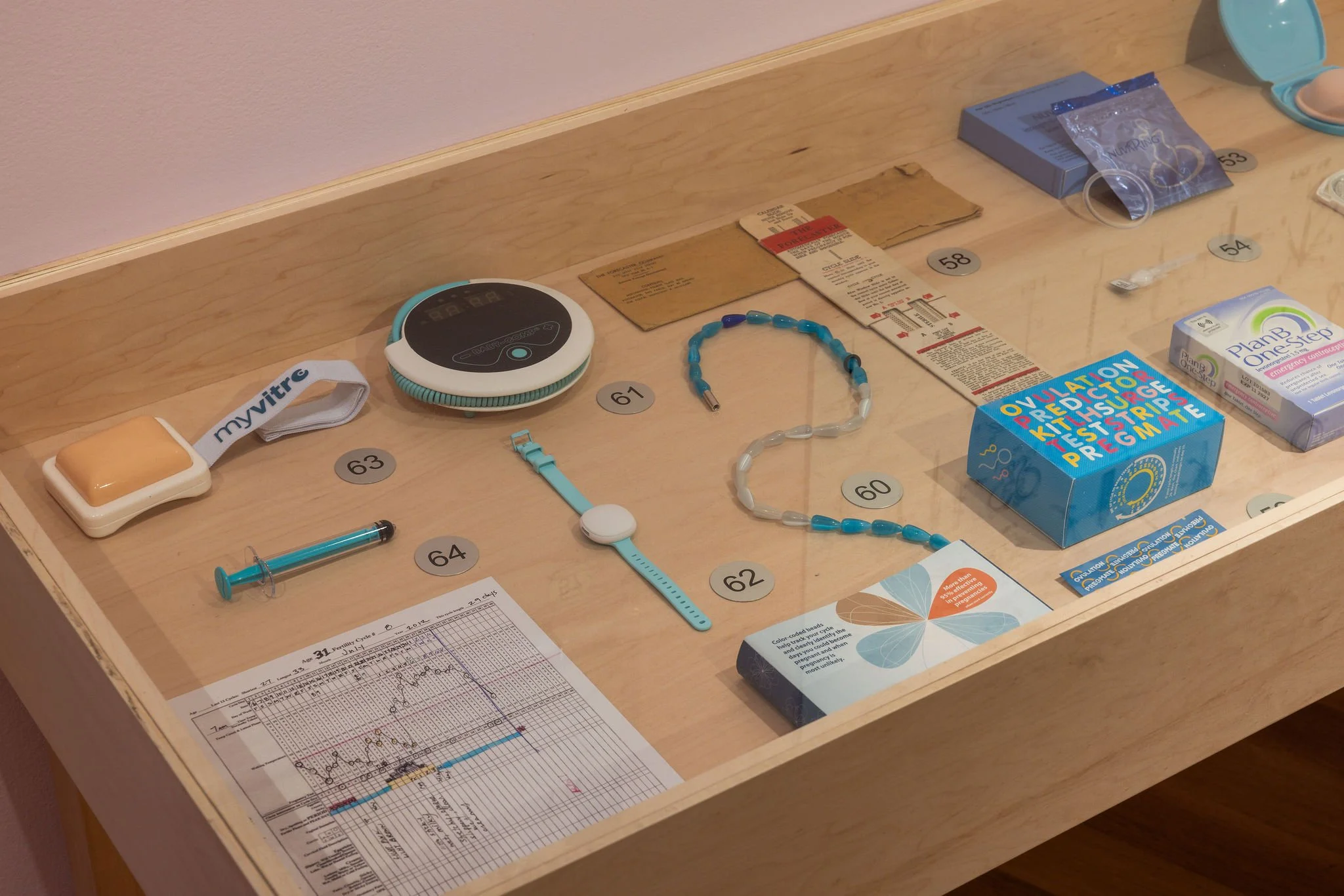
Installation view of Designing Motherhood: Things That Make and Break Our Births at the Museum of Arts and Design, New York, NY. Photo: Jenna Bascom; courtesy the Museum of Arts and Design.
Photo credit: Jenna Bascom
The exhibition ends with Reproductive Design Futures, which asks who gets to imagine and fund the next generation of tools for reproductive health. Prototypes for menstrual cramp relief and menopausal care already exist. A new, innovative and research based sanctuary-like birthing environment designed by Stiliyana Minkovska is in use for training at a London hospital. App concepts for sharing baby gear and navigating New York's transit system with a stroller have stalled for lack of investment. The ideas exist. What remains uncertain is whether they will ever reach the people who need them. The observation is clear and uncomfortable: even a great design depends on whether someone decides to make it, and whether anyone decides it is worth backing. The demands of commercialism too often stand between a good idea and the people who need it.
Designing Motherhood is still open at MAD until March 15th, 2026. The exhibition makes visible the infrastructure of care that shapes some of the most significant moments in people's lives. And perhaps, standing in front of those two boxes, you will feel what I felt, as a designer and a doula, that we are not done yet.
Mimosa Tast
19.02.2026
Designing Motherhood: Things that Make and Break Our Births. Museum of Arts and Design, New York City. On view until March 15, 2026.
References: