News
Sauna Translations Across the Atlantic
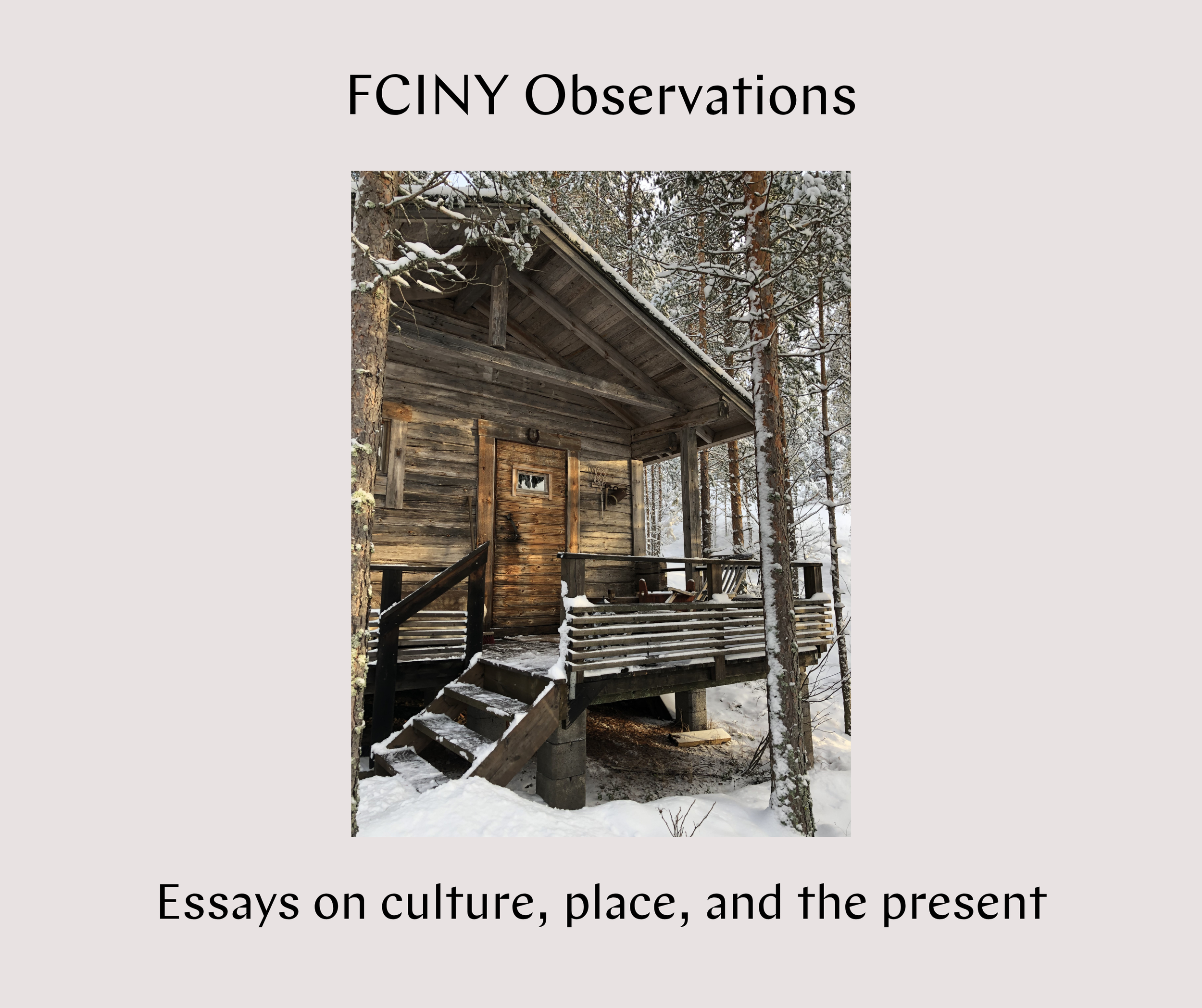
A lakeside sauna used all year around at the writer’s family cabin in Puumala, Finland.
The Finnish Cultural Institute in New York's recurrent essay series, FCINY Observations, presents cultural commentary at the intersection of Finnish and New York perspectives.
When Madeline Leung Coleman's piece “When Did Going to the Sauna Get So Stressful?” appeared in New York Magazine in late February 2026, I read it with the particular attention of someone whose work is to promote Finnish culture. The article chronicles New York's emerging bathhouse boom and profiles Robbie Hammond, the developer behind Culture of Bathe-ing, billed as New York's first sauna festival, a cluster of fifteen saunas set up in Domino Park under the Williamsburg Bridge. The festival took place February 12 – March 1, 2026. At the Finnish Cultural Institute in New York, I find myself watching Finnish culture travel the world with a mixture of pride, protectiveness, and curiosity.
Growing up in Finland, sauna has not been an exotic destination but an ordinary rhythm. Nearly every home there has a sauna. When I visit my grandparents' house, a sauna in the evening is not a plan that gets made; it just happens. It is where we go to get properly clean, yes, but also where conversations surface that would not at another time. There is something about the heat and the quiet that makes honesty easier, the same way a road trip at night does. Eyes facing forward, nowhere else to be, words coming without the weight of eye contact. Focus on physicality and being. This kind of positioning does wonders for naturally cagey people.
Reading the New York Magazine piece, I kept waiting for Finland and its sauna culture to appear as something more than a footnote. Instead, the article was largely about money. The profit margins a sauna company can maintain, bitcoin-mining heat warming plunge pools and new bathing locations opening like mushrooms after rain. At one point, Hammond describes his vision of “uniquely American bath culture.” The interviewer asks why an American version matters when immigrant communities have already brought their bathing traditions here. Hammond's answer drifts toward the idea that American bathing culture might be a blend of everything, something new, something distinctly profitable.
Finland, together with Estonia, share what might be called a common Baltic-Finnic sauna culture, one that traces a straight lineage from the Stone Age¹, while sauna traditions elsewhere in Europe largely disappeared during the Reformation². Finland is widely regarded as the cultural homeland of the sauna, though the practice was not invented there so much as preserved and developed there. The word sauna itself is Finnish. Finland has around 3.2 million saunas for a population of 5.5 million³. The UNESCO Intangible Cultural Heritage list recognizes both: Estonia's smoke sauna tradition of the Võro region was inscribed in 2014, and Finnish sauna culture in 2020, two entries for a shared inheritance⁴.
Anna Hints’ Estonian documentary Smoke Sauna Sisterhood follows women gathering in a smoke sauna through the seasons, sharing their most intimate stories in the darkness and heat. A different kind of witness is the Finnish documentary Naisenkaari — Gracious Curves — by Kiti Luostarinen from 1997, which feels strikingly current in its portrait of modern womanhood. Sauna appears throughout without comment, as it would anywhere in Finland, and that presence says more than any verbal explanation of its meaning could. The Finnish documentary Miesten Vuoro, known in English as Steam of Life, directed by Joonas Berghäll and Mika Hotakainen, travels through Finland recording men of all walks of life talking about love, loss, and friendship in saunas, one of the few spaces in Finnish culture where emotional honesty between men happens naturally. In Finland, sauna is democracy in its most literal sense. Everyone enters undressed, regardless of title or income. The silence is shared. All three films are worth watching for anyone curious about what Finnish sauna culture actually feels like from the inside.
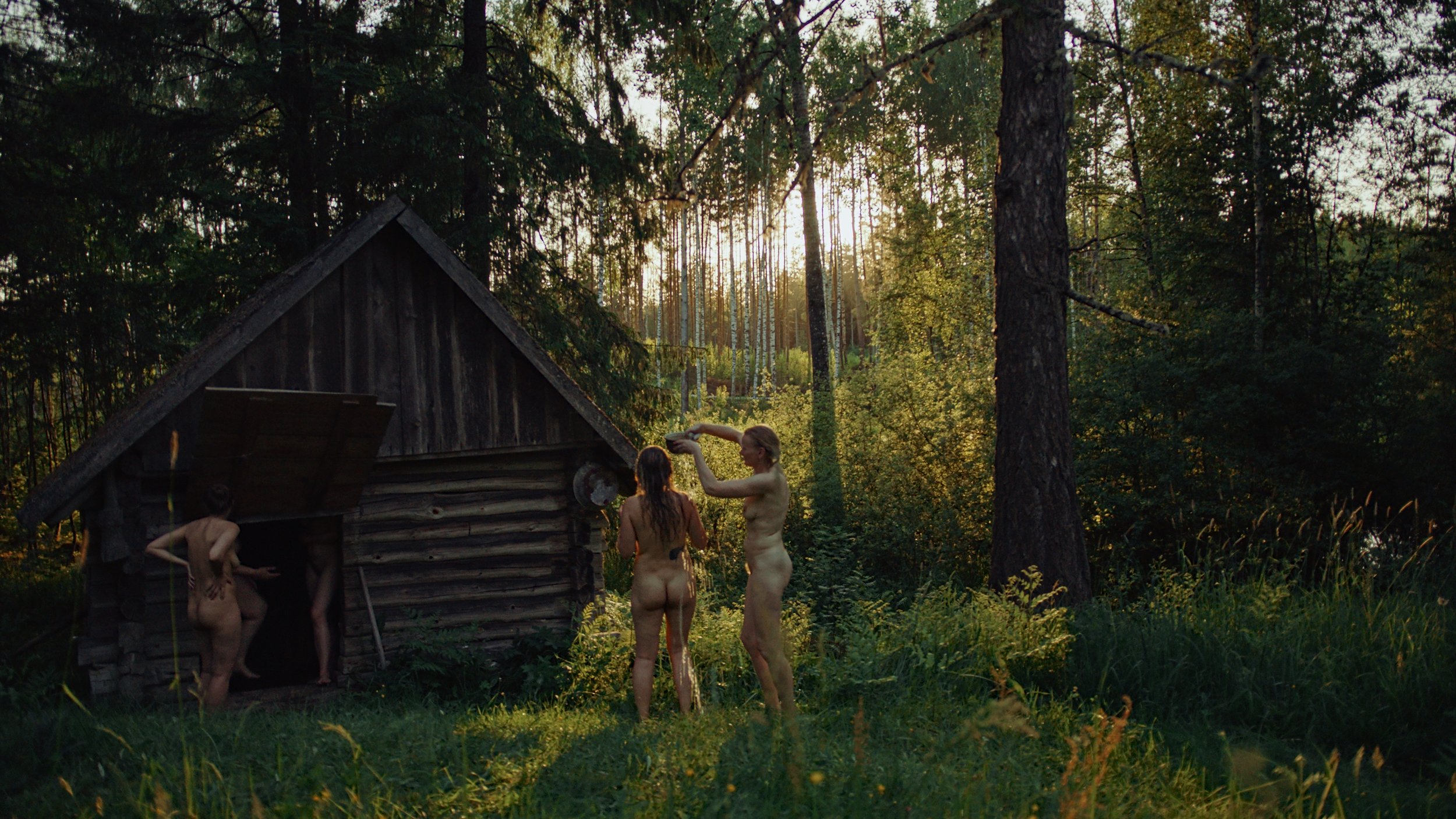
Photo: Ants Tammik / Smoke Sauna Sisterhood (2023)
Finland has a long and baffling tradition of failing to claim its own cultural exports, not for lack of quality, but for a certain cultural modesty and lack of self-promotion. A German guest of my roommate's recently told me she had always assumed the Moomins were Norwegian. Finnish sweets are sold in a New York City shop that sells Swedish candy. There is no Finnish candy shop. The sauna, it seems, is slipping through our fingers in the same way.
The sauna travels as an empty space.
In Finland, nobody talks about the physical health benefits of saunas. There is something worth examining in that gap. The sauna as architecture, as a product, has been remarkably successful at crossing borders. What has not followed is the understanding of what Finnish sauna is for: not performance enhancement or Instagram content, but the idea that stillness and silence shared with others is enough. Almost a devout experience.
In January 2026, just before Culture of Bathe-ing opened in Brooklyn, Eero Kilpi, Finlandia Foundation's Lecturer of the Year, brought his lecture “Sauna Lost in Translation” to the Scandinavia House in New York. Kilpi traces what happens when the ancient Finnish practice morphs into what he calls the “hotbox phenomenon”: a wellness trend focused on heat, hardware, and health fads that strips sauna of its spirit, ritual, and deeper meaning⁵. Kilpi's lecture is available to stream on YouTube.
This is not a complaint about cultural appropriation but about appreciation and exchange. Bathing cultures have always traveled and transformed. The temazcal, the onsen, the hammam, the Russian banya: each carries its own history, and each has been reinterpreted as it moved. But what strikes me about the American sauna moment is less that it has changed the sauna than that it has emptied it of cultural content entirely, replacing origin with aspiration. The result is a sauna fluent in productivity, sold at $95 for two hours. For comparison, architecturally stunning public saunas in Helsinki cost €19–33.
The question is not how to reclaim the sauna, but how to make its cultural context more legible. So that someone stepping into a hot room for example in Brooklyn, might understand they are stepping into something with a history. The sauna culture was declared world heritage not because it is old, but because it represents a particular relationship between people, nature, and silence. That is the part that deserves to travel. All of us, individuals, institutions, cultural organizations, need to be louder and more deliberate in insisting on it.
Mimosa Tast
30.03.2026
The article mentioned can be found here: When Did Going to the Sauna Get So Stressful?, published by Curbed (New York Magazine), February 25th, 2026.
References: